
San Antonio
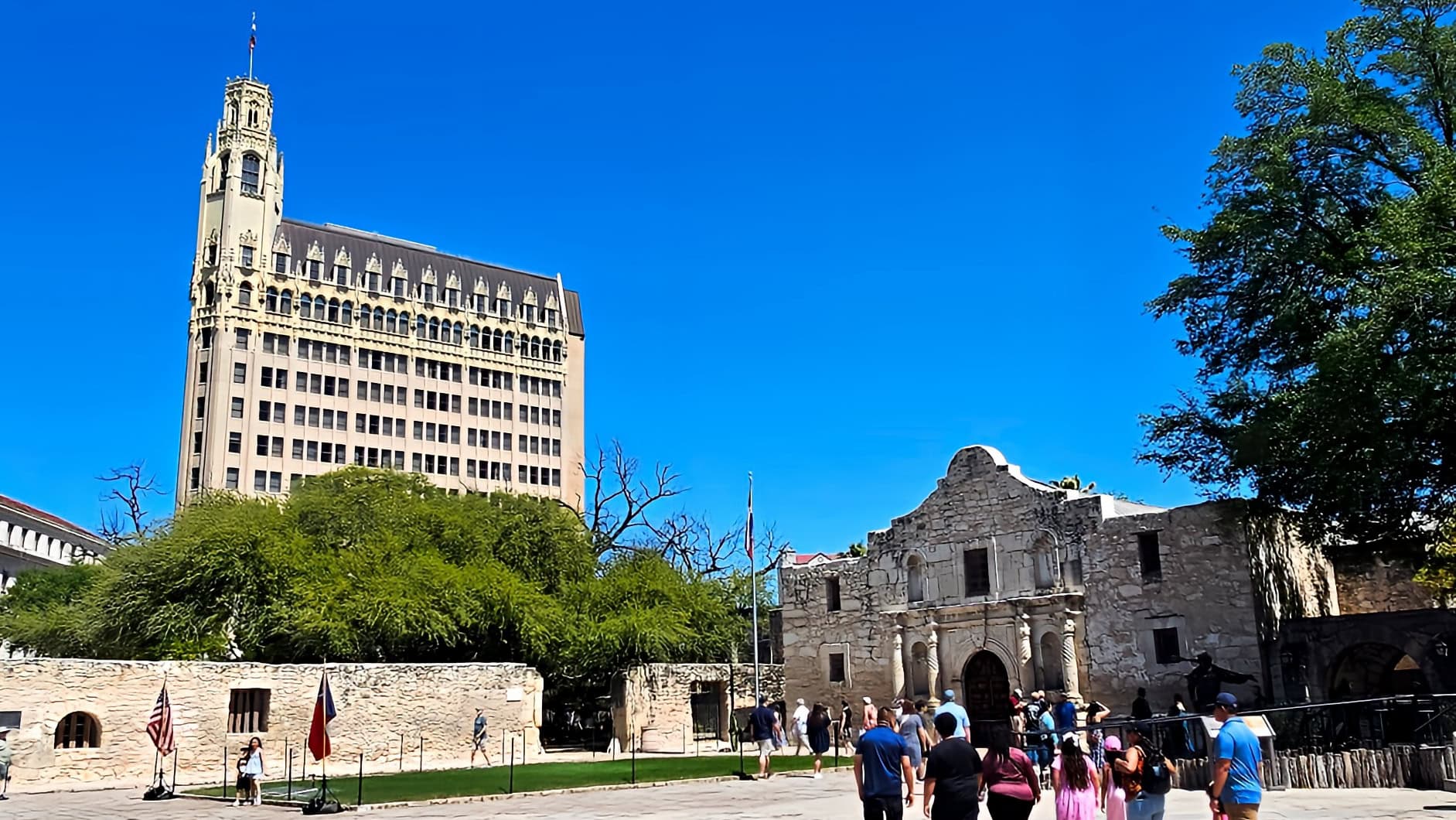
San Antonio is the 8th largest city in the USA, and if you’ve ever been there, you already know about the “Alamo” and the “Riverwalk.” Both are major attractions. Jackie has been to San Antonio a number of times for conferences back when she worked for IBM. I’ve been there as well, but only once—and that was at least 25 years ago. A lot has changed since then, and not all of it for the better.
The Alamo is an important historic site, situated right in the middle of the city. When I visited 25 years ago, you could walk around the grounds and see the fortifications—or at least replicas of the fortifications—that existed in 1836 during the Battle of the Alamo. That is no longer the case. There are still small segments of replica fortifications to be seen, but you need a fair bit of imagination to understand the size of the original mission compound.
I mentioned this to one of the official tour guides. Her response was something along the lines of, “Yes, we keep making it better.” So much for preservation of history.
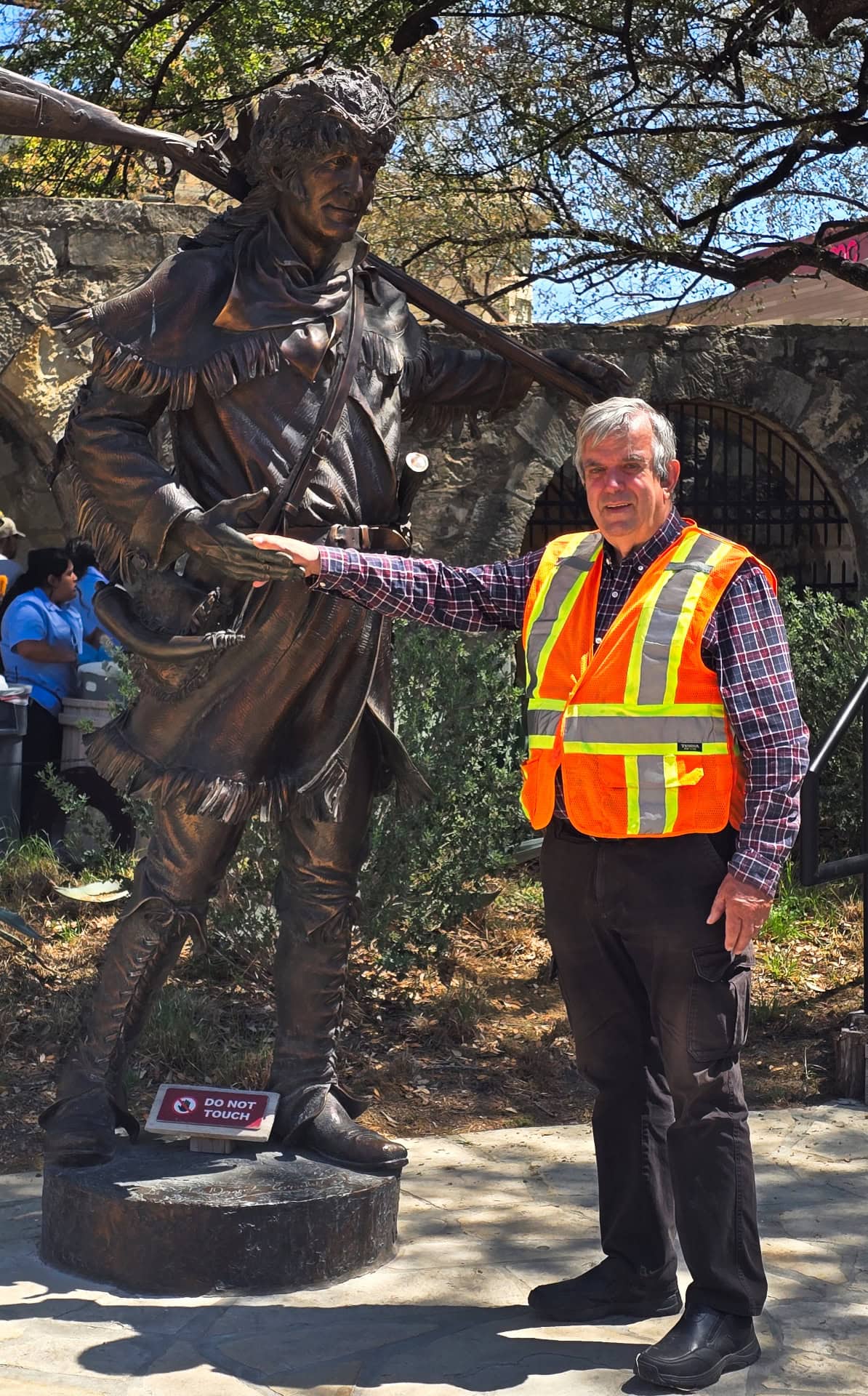
Originally, the Alamo was a Spanish mission, built by missionaries to convert the native population to Christianity and to establish Spain’s presence in Texas. In 1836, an army of approximately 2,000 men led by Santa Anna defeated about 200 Texan defenders in the Battle of the Alamo. Among the defenders were Davy Crockett and James Bowie. The battle lasted 13 days, and all of the defenders were killed.
The rallying cry “Remember the Alamo!” later inspired Texan forces, who went on to defeat Santa Anna a few weeks later at the Battle of San Jacinto, securing Texas’ independence.
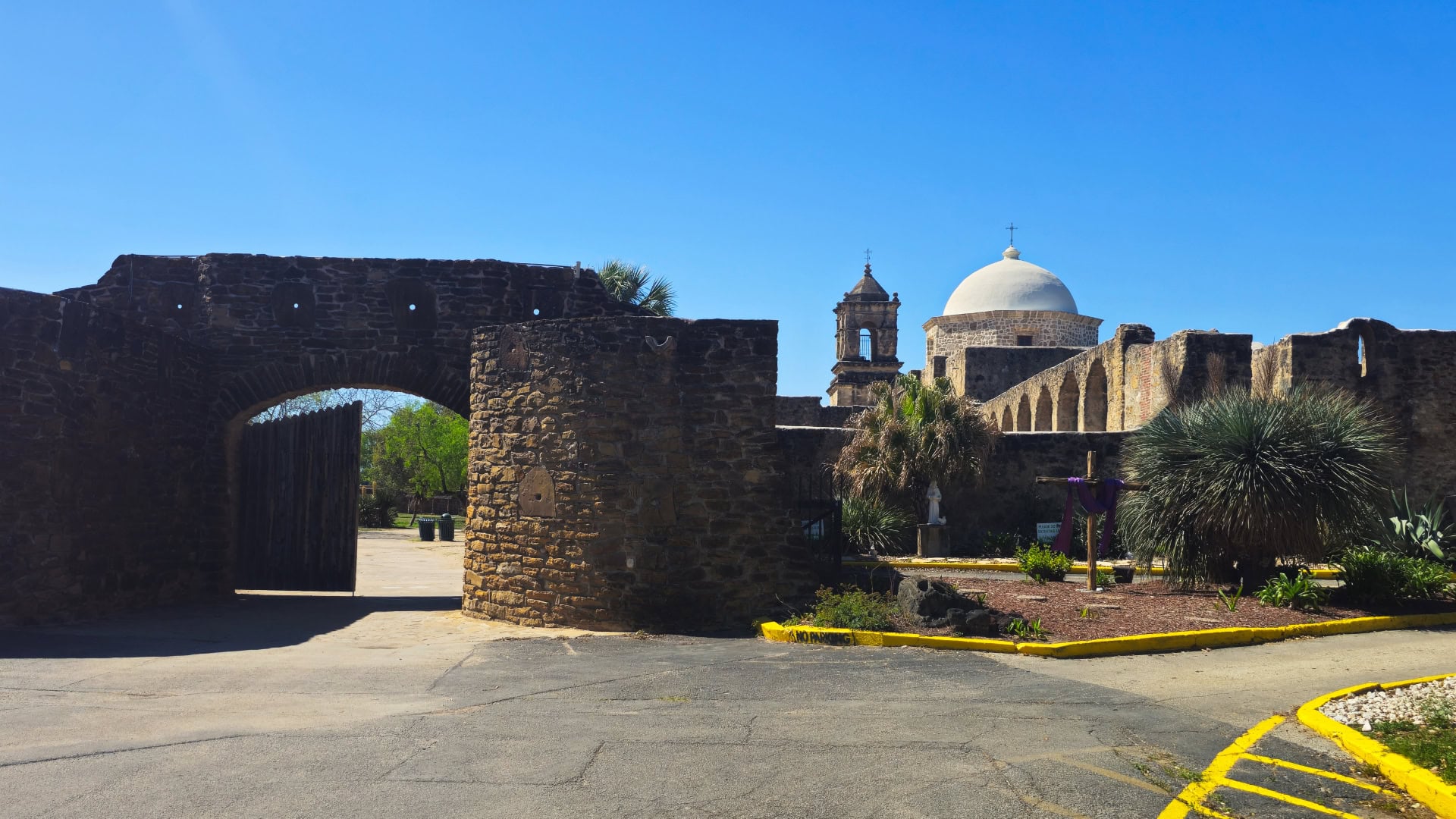
While in San Antonio, we also visited Mission San Jose, a few kilometres south of the city centre. It’s not nearly as famous as the Alamo, but it has been preserved in a way that makes it much easier to picture what the mission looked like in the 19th century—more like what I remember the Alamo looking like 25 years ago.
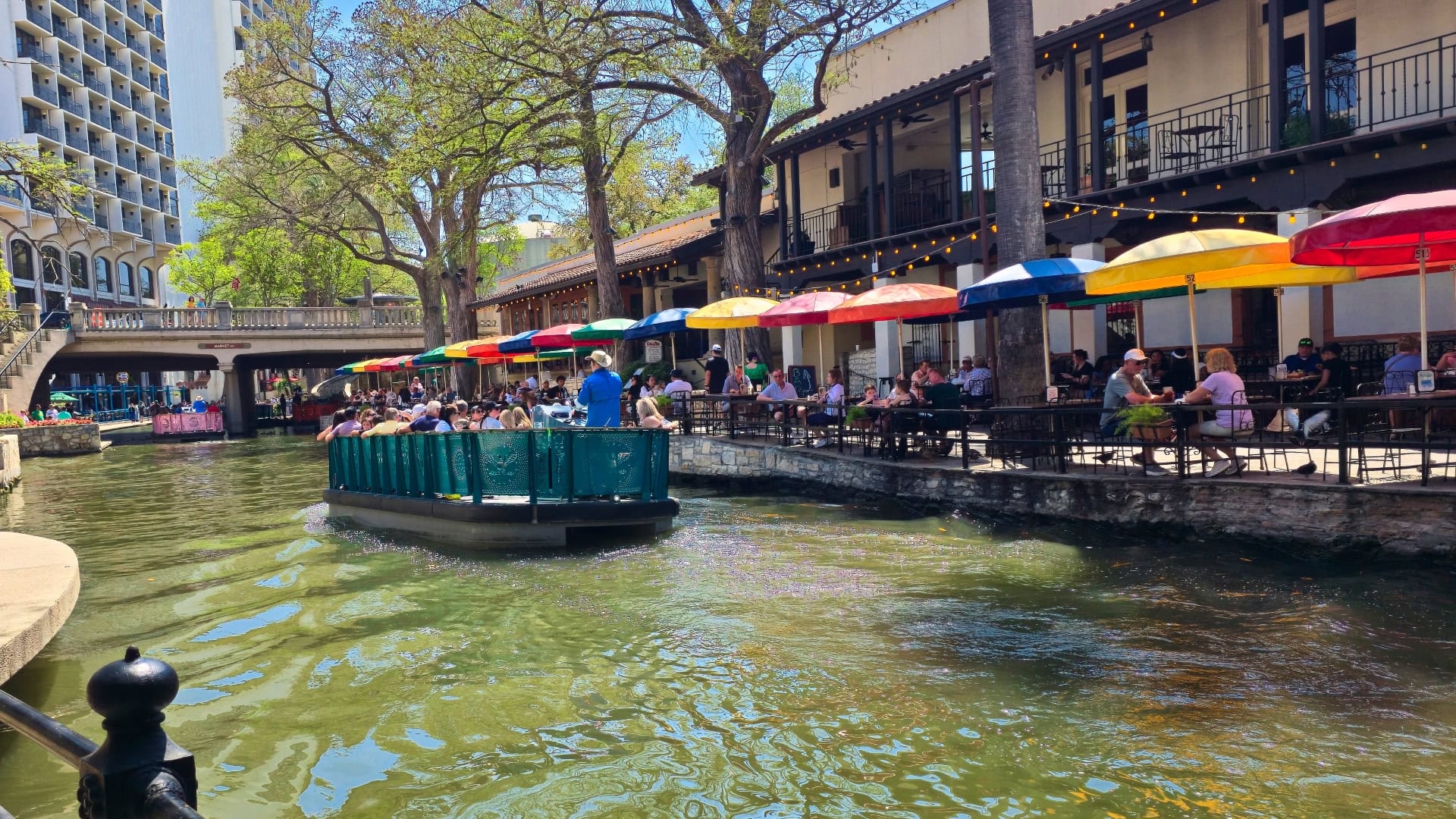
Of course, no visit to San Antonio would be complete without spending time along the Riverwalk. The section that most visitors see is a 2 km loop branching off the San Antonio River right in the downtown core. We walked the loop along the riverbank and stopped halfway for a pizza lunch. You can also take a narrated boat ride around the loop—we did that as well and quite enjoyed it.
The day after we arrived in San Antonio, Jackie stopped at a tourist office and asked if there were any small towns nearby worth visiting. One suggestion sounded promising, so on a particularly hot day we set off for the town of Boerne (sounds like “Beer”). It’s only about a half-hour drive north of San Antonio—though from our campground which was ½ hour south of San Antonio, it took us closer to an hour.
By the time we arrived, it was lunchtime—convenient timing, if nothing else—so we stopped at a likely-looking restaurant and enjoyed a very nice meal. Our waitress was especially friendly, and when Jackie explained that we were visiting for the day, she asked what there was to see in town.
Her answer caught us completely off guard: “Nothing,” she said, without hesitation. She then helpfully suggested that we visit “Pearl” and “Southtown”—both of which, as it turns out, are back in San Antonio.
On another day, we cycled the entire length of the Riverwalk. The round trip along the Riverwalk Park is about 30 kilometres and takes you past several old Spanish missions. You do have to watch for pedestrians, but it was a very hot day, so there weren’t many people out in the midday sun to slow us down.
The path itself is smooth concrete, with picnic tables every few hundred metres. Most of these rest stops were deserted. Some had water fountains, and a few even had shaded canopies, which were very welcome in the heat.
At one of the missions, we were admonished by a fellow with a weed whacker for riding our bikes when we should have been walking them. We had seen the sign, but with no one else around, we didn’t think it mattered much. Apparently, it did.
We also had an interesting parking experience at a downtown restaurant. There was a parking lot right next door, with signs directing you to scan a QR code to pay. Other signs indicated that if you ate at the restaurant, they would cover two hours of parking.
When we asked how that worked, the waitress explained that they would only cover the parking if we actually stayed for two hours. Cameras in the lot recorded us leaving the car, and another camera captured us entering the restaurant. After scanning the restaurant’s QR code, I received a text confirming that our parking was covered.
However, if we left early, the exit camera would cancel the remaining time. In other words, no grabbing a quick snack and then heading off to the Alamo (just around the corner) on their dime.
SAS shoes are manufactured in San Antonio—hence the name. Jackie has been buying the same model of walking shoes for years. When one pair wears out, she replaces them with another. Her current pair has started to leak, so even a bit of wet grass leaves her with soggy socks. They’re not cheap, but they have Velcro fasteners, which makes them easy to get on and off and they have good ankle support, so she’s a fan. While we were here, she picked up two new pairs. Designed as a replica of an old general store, this large SAS outlet is a popular stop that’s set up specifically for tourists—complete with a vintage jukebox and an ice cream counter we enjoyed.
We were looking forward to a tour of the shoe factory but it was cancelled for the week we were in town.
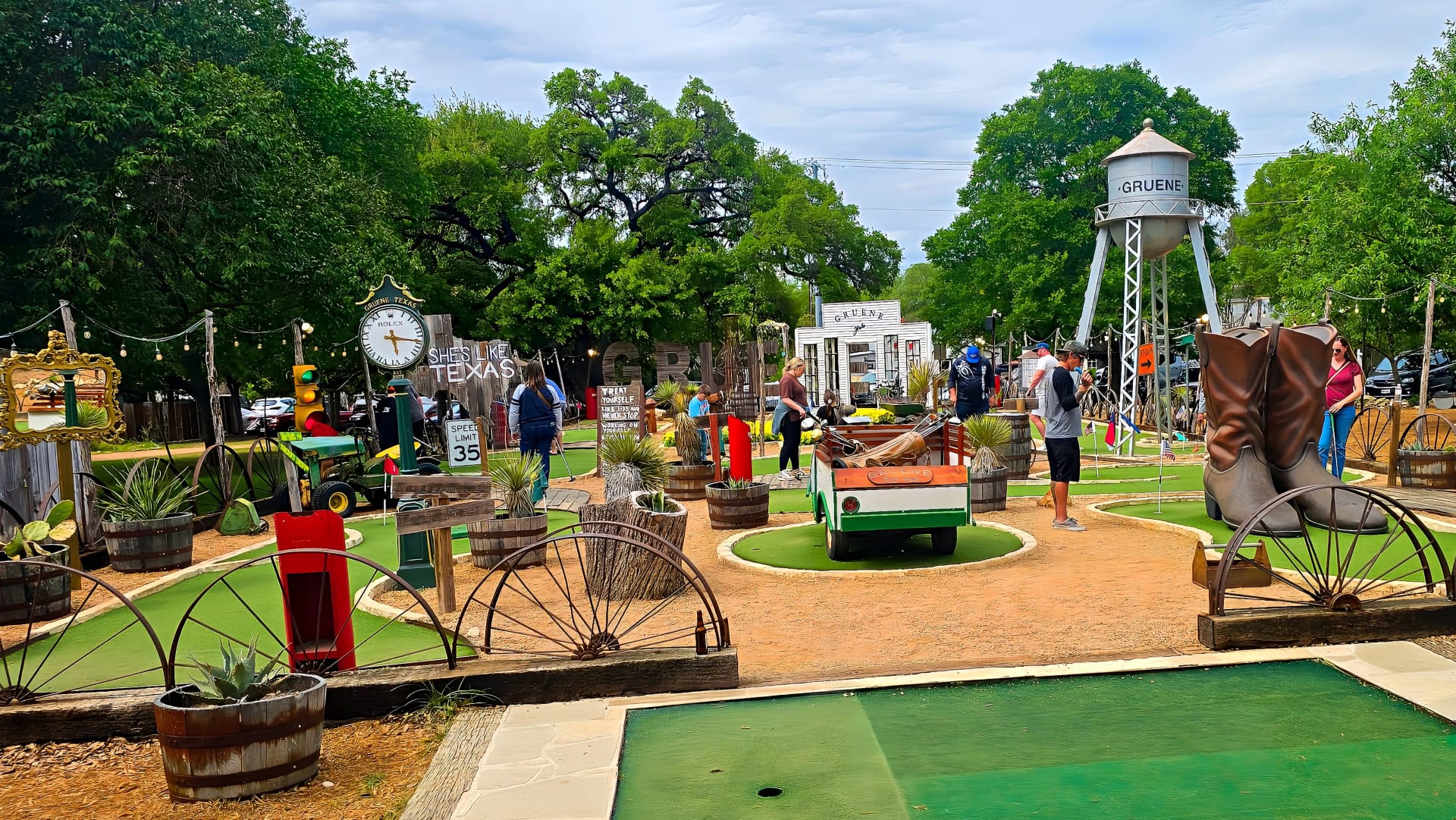
On our last day, we visited the town of Gruene (pronounced “green”). It was founded in 1845 by German immigrant Ernst Gruene and his wife Antoinette, who established a cotton plantation in the area. He built homes for workers and family, and a town gradually formed around them.
Gruene prospered for decades, but things began to unravel in the 1920s. Ernst’s son died in 1920, and two years later the cotton gin burned down. Although it was rebuilt with electric power, the Great Depression eventually finished off the family business.
One thing that did survive was Gruene Hall, which became the social centre of the community. Built in the 19th century, it’s still operating today. During our visit, two stages were set up at opposite ends of the hall, so while one band was getting ready, another was already playing. We heard a mix of country, Americana, and blues.
The whole town was bustling. Despite looking a bit worn—many of the buildings appear almost run down—that seems to be part of the charm. We asked if there was a special event going on, but were told it’s always like this. In fact, it was the busiest place we’d seen since leaving Canada with live music everywhere.
From here, we’re heading north, making our way toward Route 66.
Leave a Reply