Oklahoma
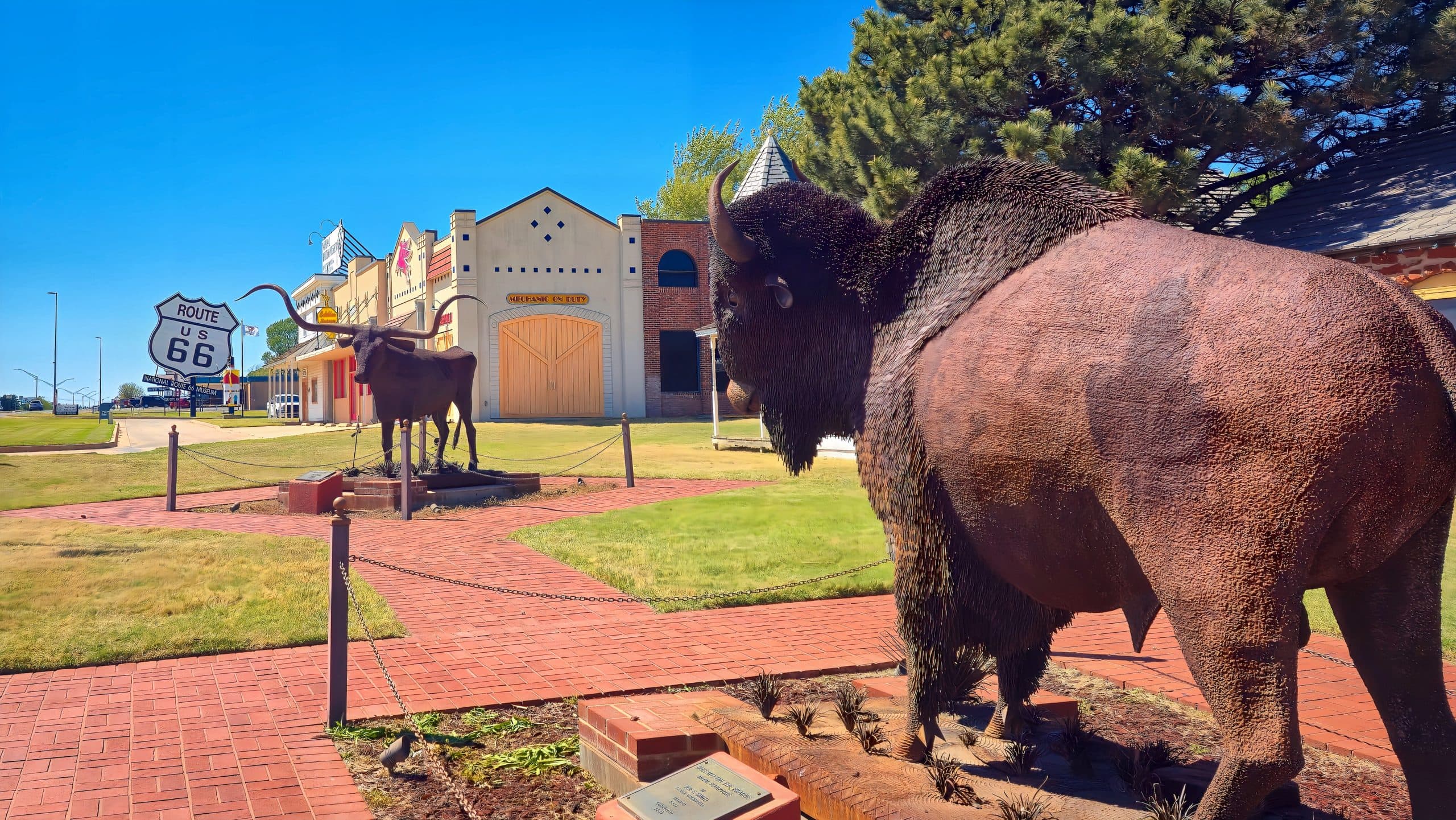
On our way to Oklahoma City, we spent a couple of days in Sayre, Oklahoma. We found Sayre itself to be fairly unremarkable, so we visited the Route 66 Museum in nearby Elk City instead.
The museum turned out to be more than a museum, it was essentially a recreated small town, complete with a church, one-room schoolhouse, lawyer’s office, land registry office, opera house, several stores, an apothecary, barber shop, blacksmith, and a farm area with equipment. Much of the farm equipment I remembered from my youth. So I spent quite a bit of time wandering around the farm section, reminiscing. Jackie, however, insisted I delete most of my photos of rusty machinery, though I managed to keep about half a dozen. Some of the equipment has been restored to showroom condition, but most of it was in need of a lick of paint or missing critical components, just like when I was a teenager on my father’s farm.
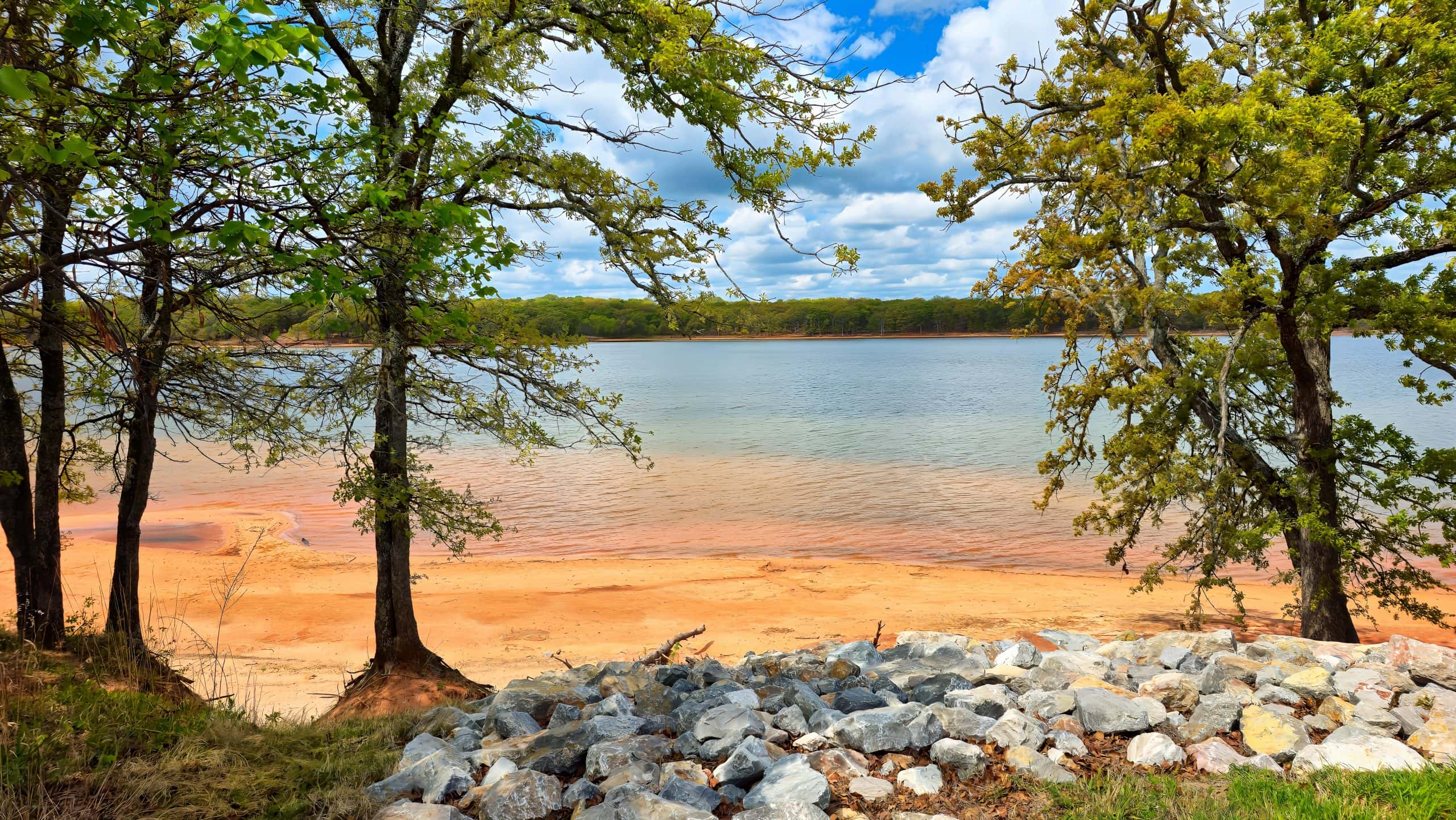
We then spent a week near Oklahoma City in a state park near Norman, Oklahoma. The park felt huge because it wraps around Lake Thunderbird, which has a surface area of about 6,000 acres and roughly 138 kilometers (86 miles) of shoreline. Our campground had very few guests. Although there were a few other campers, none were near our site, which overlooked the lake. We woke up each day to this view from our front window.
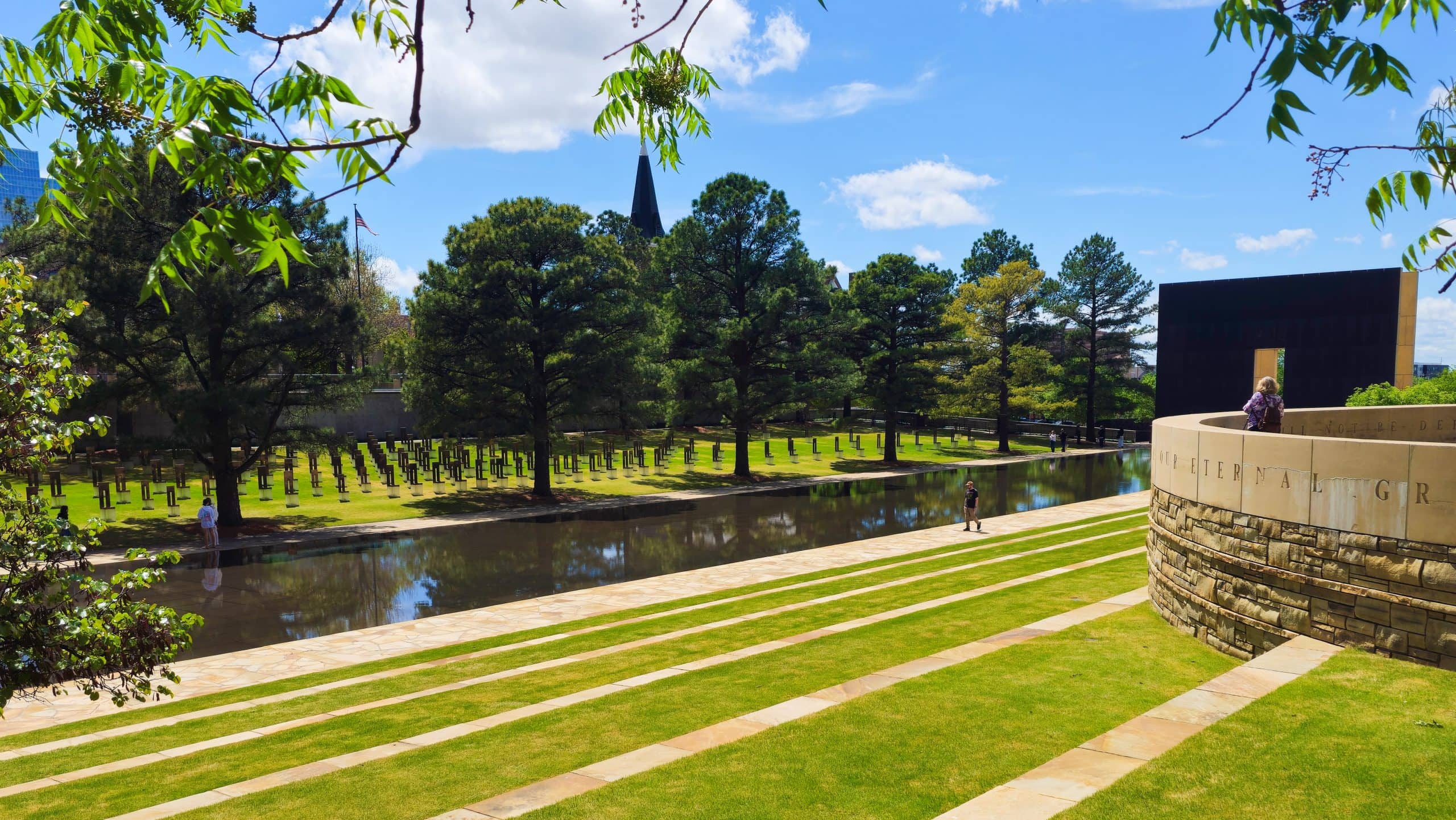
In 2014 we visited the National Memorial site in the heart of Oklahoma City, and it made a strong impression then, and again during this visit. The memorial commemorates the bombing of a federal building on the morning of April 19, 1995, in which 168 people, including 19 children in a daycare, were killed. It is considered the United States first act of domestic terrorism. The memorial includes a glass chair for each victim with their name etched on it. The chairs for the children are smaller. The chairs are lit at night. The site is beautifully maintained and is a powerful place to visit and reflect on the horror of the event that led to its creation.
The memorial has huge twin bronze gates at the two ends. The white one is marked 9:01 and the black one is marked 9:03. Between them is a huge Reflecting pool made of a thin layer of water flowing over polished black granite. 9:01 represents the last moments of peace, while its opposite gate, 9:03, represents the first moments of recovery. The reflecting pool is the very long period of 9:02 when the explosion occurred. I think it signifies both how long that minute could be but also, if you looked into it, you looked changed, and that is what happened here.
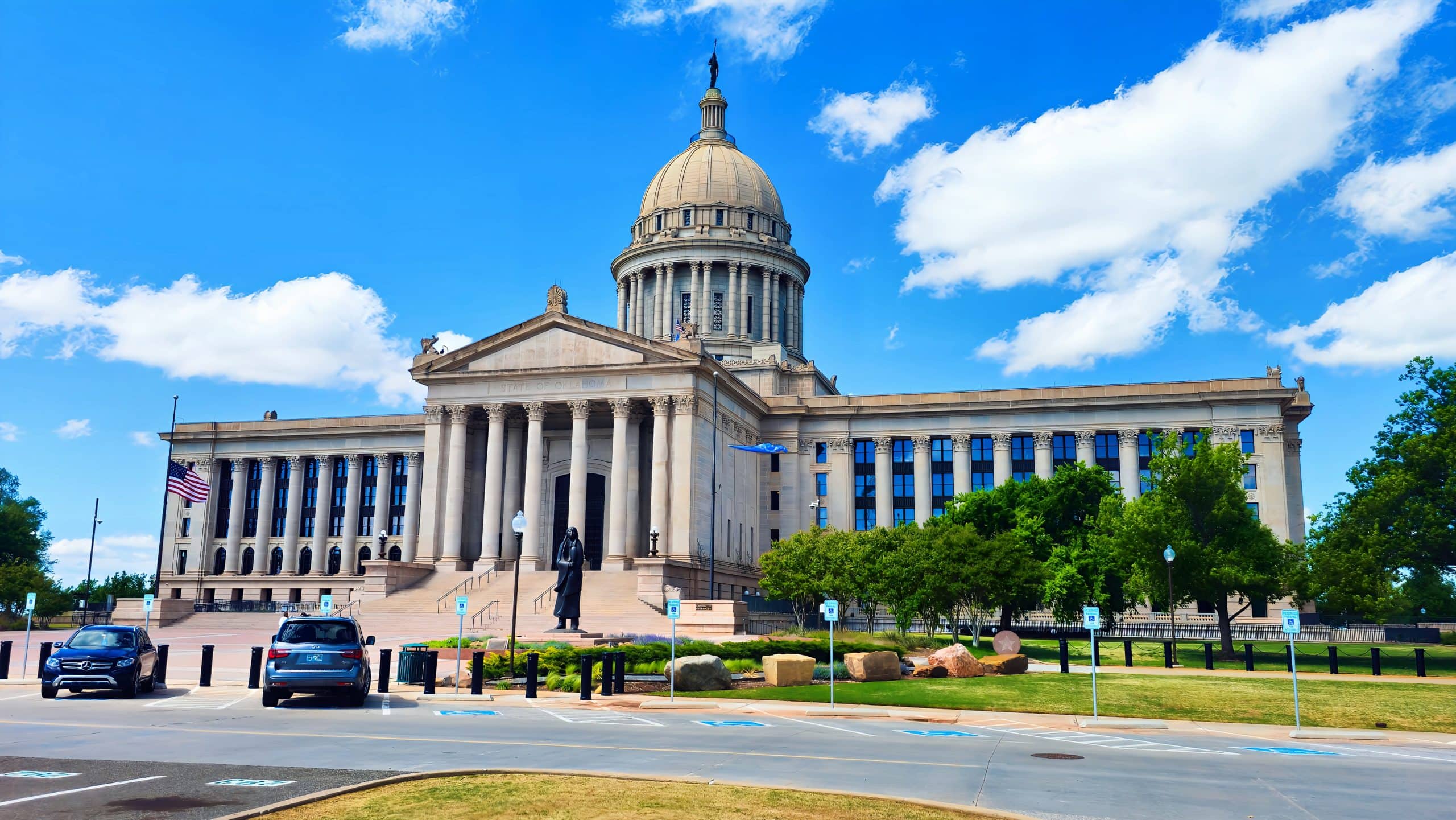
There are several operating oil wells on the Capitol grounds. The closest is within a couple of hundred meters of the Capitol building, and several are visible from the grounds and nearby parking areas. The wells tap into the Oklahoma City Oil Field, discovered in 1928 before the modern Capitol complex was fully developed. When the state expanded the complex, the mineral rights were still active, so drilling continued. The state earns revenue from these wells, making the Capitol not just a seat of government, but also a small oil-producing property. It’s quite a sight, pumpjacks (“nodding donkeys”) working within view of a state capitol building.
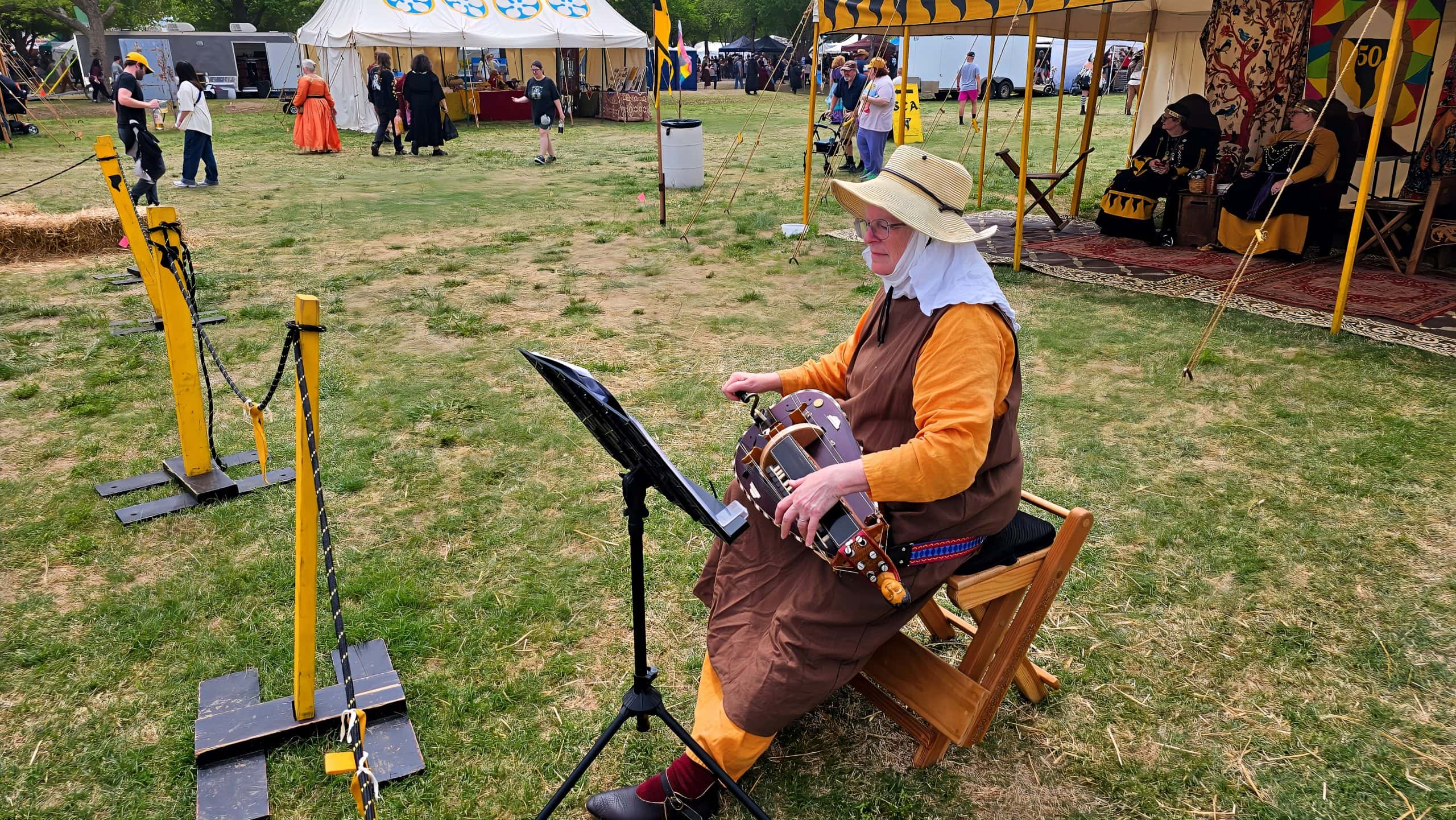
Happenstance gave us the opportunity to visit the Norman Medieval Fair in Norman. We’ve attended similar fairs in Europe. While European settings usually come with a castle and moat or river, those fairs were not nearly as crowded and busy as the one in Norman. Another difference we noticed was that in Europe, typically only the exhibitors dress in period costume, whereas at the Norman Medieval Fair, many attendees were also in very elaborate outfits.
The photo above shows a woman in period dress playing a hurdy-gurdy (sometimes humorously referred to as a “hurly-gurly,” though that’s another story). A hurdy-gurdy is a medieval instrument. It has a crank on one side that turns a wheel acting like a continuous bow, keys that change the notes, and strings that vibrate to produce sound. She didn’t appear to touch the strings directly while playing. During an interlude, the musician told us she had only recently learned to play the instrument after seeing one at a previous medieval festival.
As she played the hurdy-gurdy, a group of about ten people in period costume danced to the music. All but one had only recently learned the steps, and some seemed to be improvising their interpretation of them. The dance involved quite complex twirling while moving in a circle, part performance, part friendly chaos, all very entertaining.
To clarify how a hurdy-gurdy works, I looked it up online, which confirmed:
- The crank turns a wheel that acts like a bow
- Keys change the notes
- A rosined wheel continuously rubs the strings to produce sound
- Drone strings create a bagpipe-like background tone
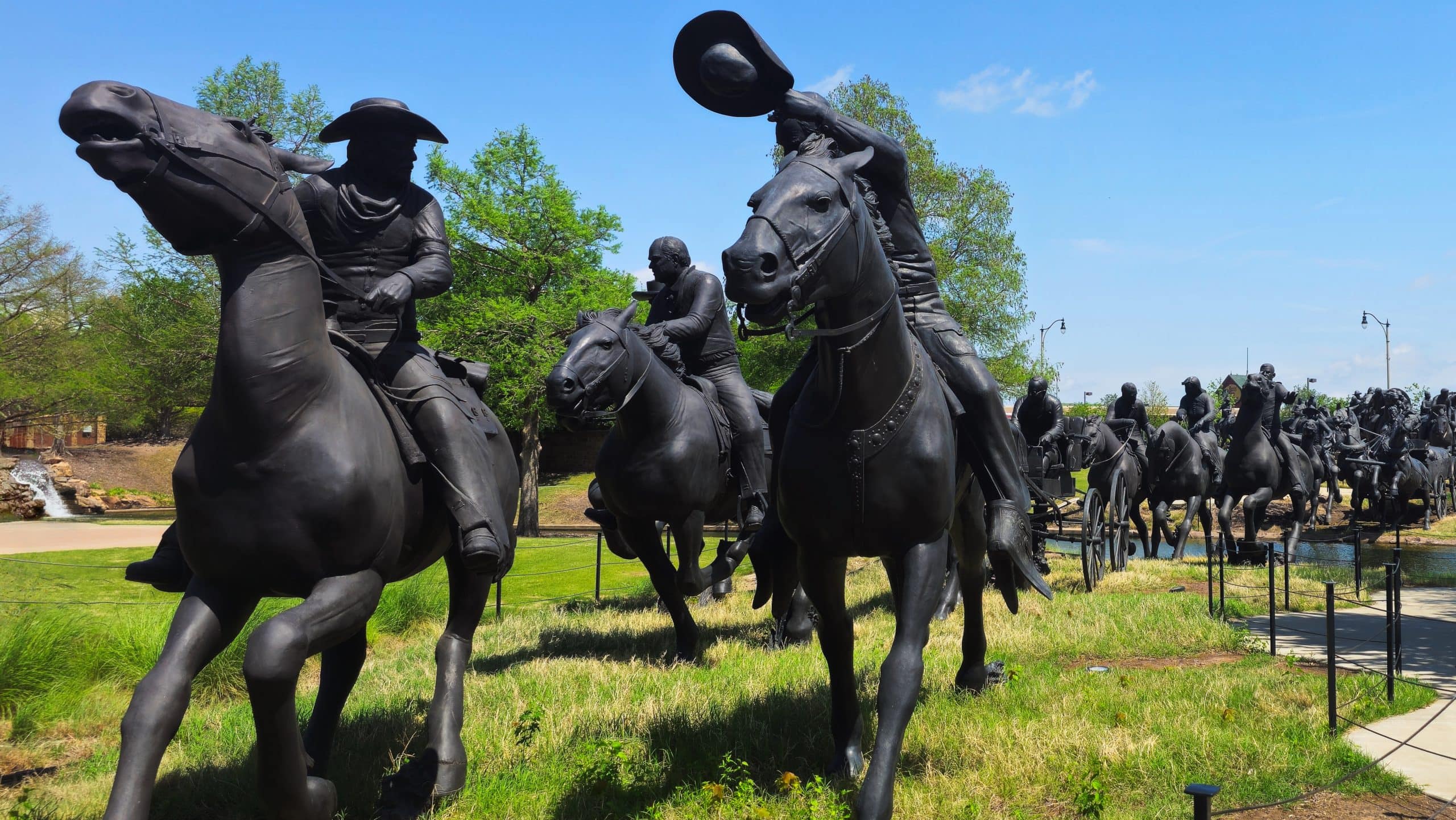
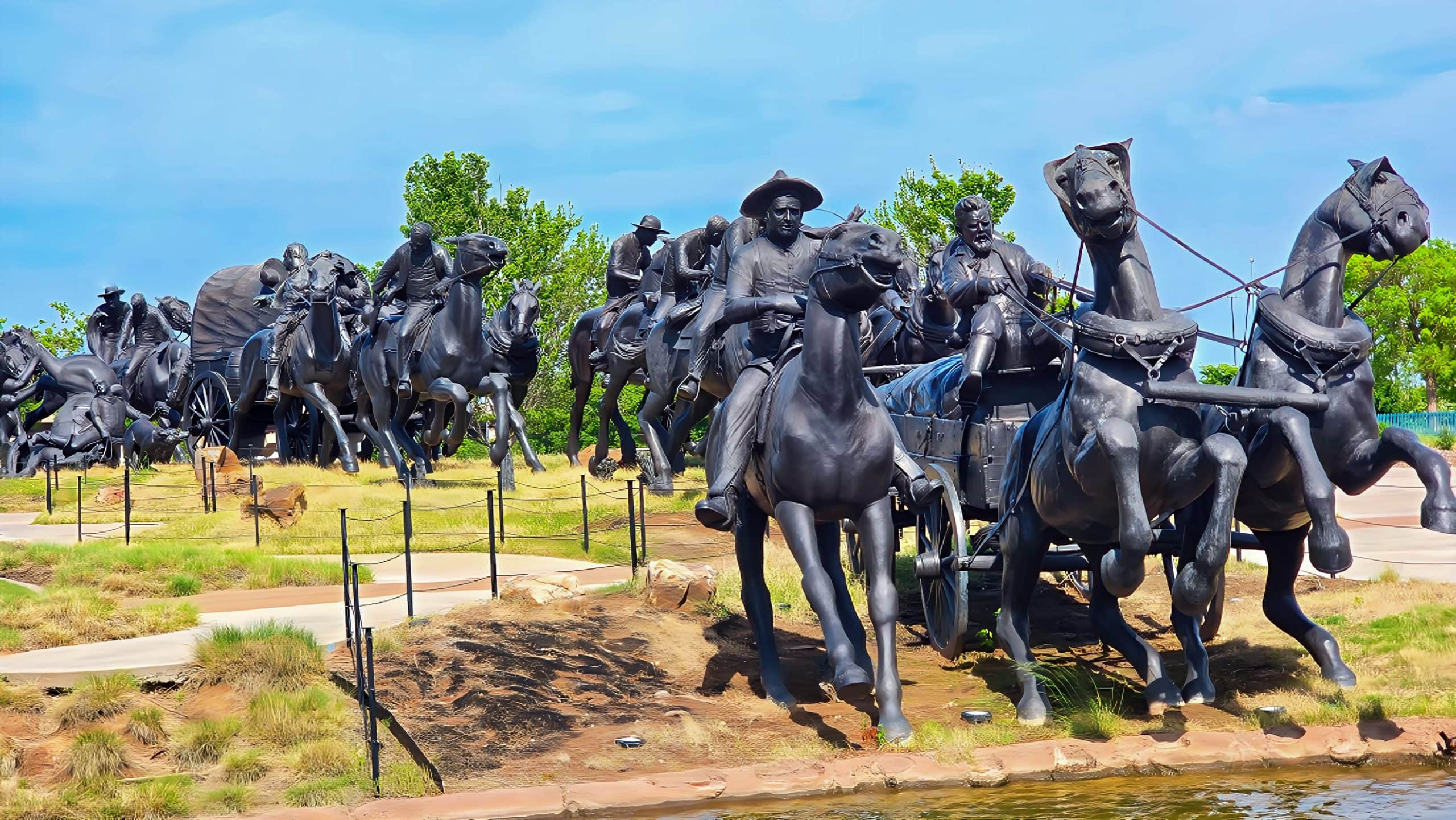
The photos above show a portion of 47 massive bronze statues commemorating the opening of the land in Oklahoma Territory with the Land Run of 1889. The exhibit made quite an impression on both Jackie and me when we first saw them in 2014 when it was a work in progress. The last statue was added in 2019 and the exhibit is even more impressive now. The sculptures are 1½ life size, which makes them quite dramatic when you approach them in person.
On April 22, 1889, the U.S. government opened roughly two million acres of previously restricted land, known as the “Unassigned Lands”, for non-Indigenous settlement. At exactly noon, thousands of people on horseback, in wagons, on foot, and even on bicycles rushed in to claim land. The area had originally been set aside for Indigenous Nations, but increasing settler pressure led to it being opened under the Homestead Act, allowing individuals to claim typically 160 acres if they lived on and improved it. An estimated 50,000 people lined up at the borders with 10,000 of them starting from Oklahoma City alone. When the signal was given, they surged forward, racing to stake claims by marking land with flags or posts. By nightfall, towns like Oklahoma City and Guthrie had appeared almost overnight.
Not everyone waited for noon. Some entered early to try and secure better land. These people were called “Sooners.” Disputes over claims were common and sometimes led to conflict or legal battles.
The Land Run of 1889 is often remembered as a symbol of American frontier expansion and rapid settlement. It is also remembered for the displacement of Indigenous peoples and broken treaties, making it a controversial part of history. In 1907, Oklahoma Territory and Indian Territory were combined to become the 46th state of the Union.
Oklahoma is known for being windy and dry. We saw quite a few tornado warning sirens mounted on telephone poles while there. These outdoor warning sirens, when activated, produce a distinctive wailing or rotating sound. They are typically tested at noon every Saturday, but the test was cancelled the Saturday we were there because there was actually a risk of tornadoes, and they didn’t want people confusing a test with a real warning.
So, despite it being tornado season and tornadoes occurring elsewhere in “Tornado Alley,” we thankfully didn’t see any while we were in Oklahoma. It did, however, rain pretty hard one night, just enough to remind us the weather is still in charge.
We are headed north next and expect to spend a week near Wichita, Kansas. We have never camped in Kansas before so we will be able to add a new flag sticker to the side of our motorhome. Kansas is of course still in Tornado Alley, so we are hoping our luck holds.
Leave a Reply