More Rocky Mountains
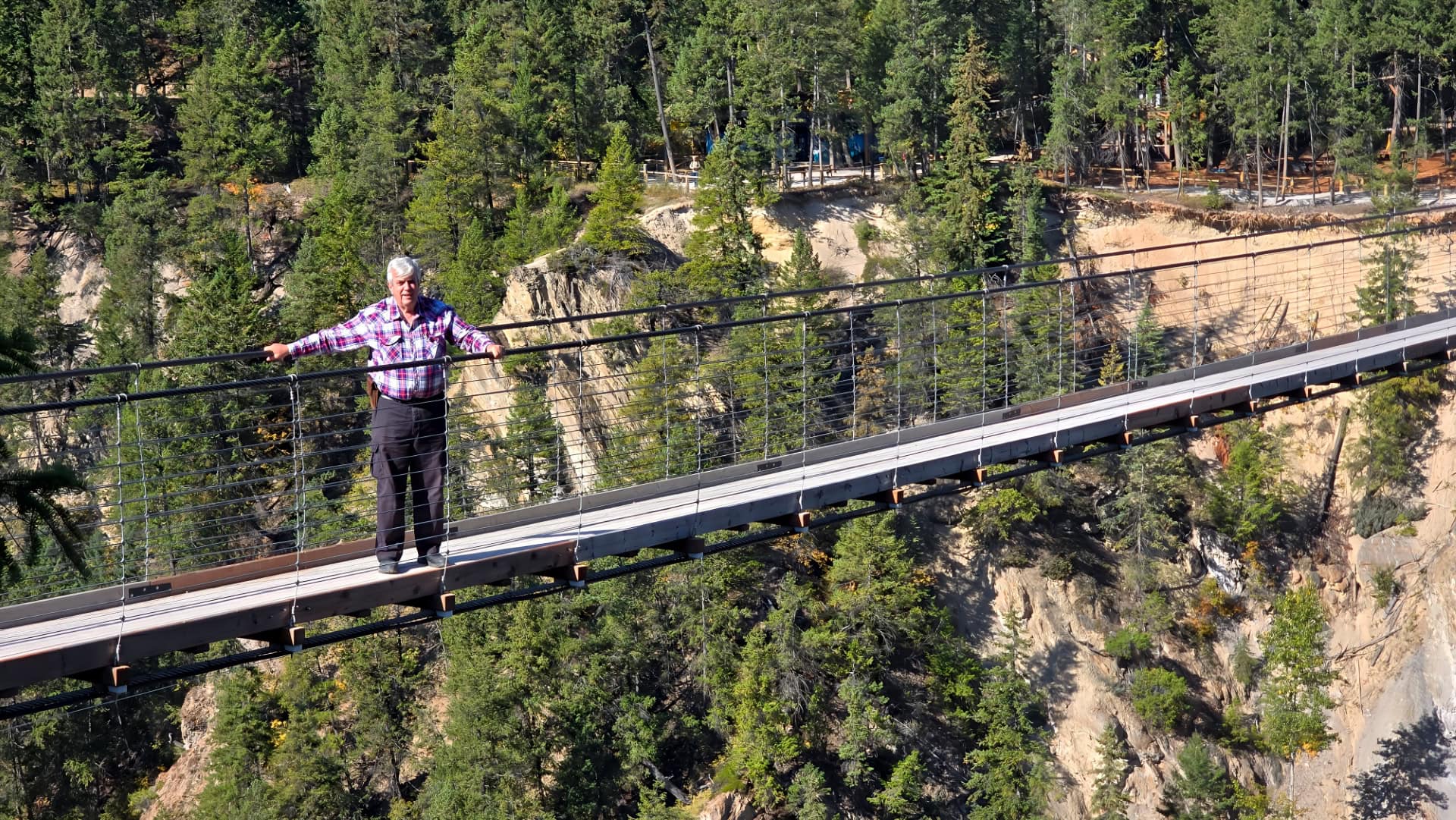
Before leaving Golden for Revelstoke, we toured the Golden Skybridge Adventure Park. We waited until Monday to visit because we thought there would be fewer fellow adventurers. The park has many attractions, including zip lines, a roller coaster where you control the speed, axe throwing, and several climbing challenges. If there is a common theme, it would be the number of attractions that involve being a considerable distance above the ground. For me, the challenge was traversing two very long swinging bridges spanning a canyon.
These bridges sway no matter how carefully you walk because there are other people on the bridge who seem to get some sort of perverse pleasure out of making my knees wobble. About 50 years ago, I married one of those people. It didn’t seem to matter how long I waited for the traffic on the bridge to clear before starting to cross. There was always someone else who simply had to cross the highest swinging bridge in Canada at exactly the same time I was on it. Coincidence? I think not. Not only that, but when I finally did get across, I had to do it again on the sister bridge in order to get back to terra firma. Apparently, one trip across a terrifying bridge was not enough.
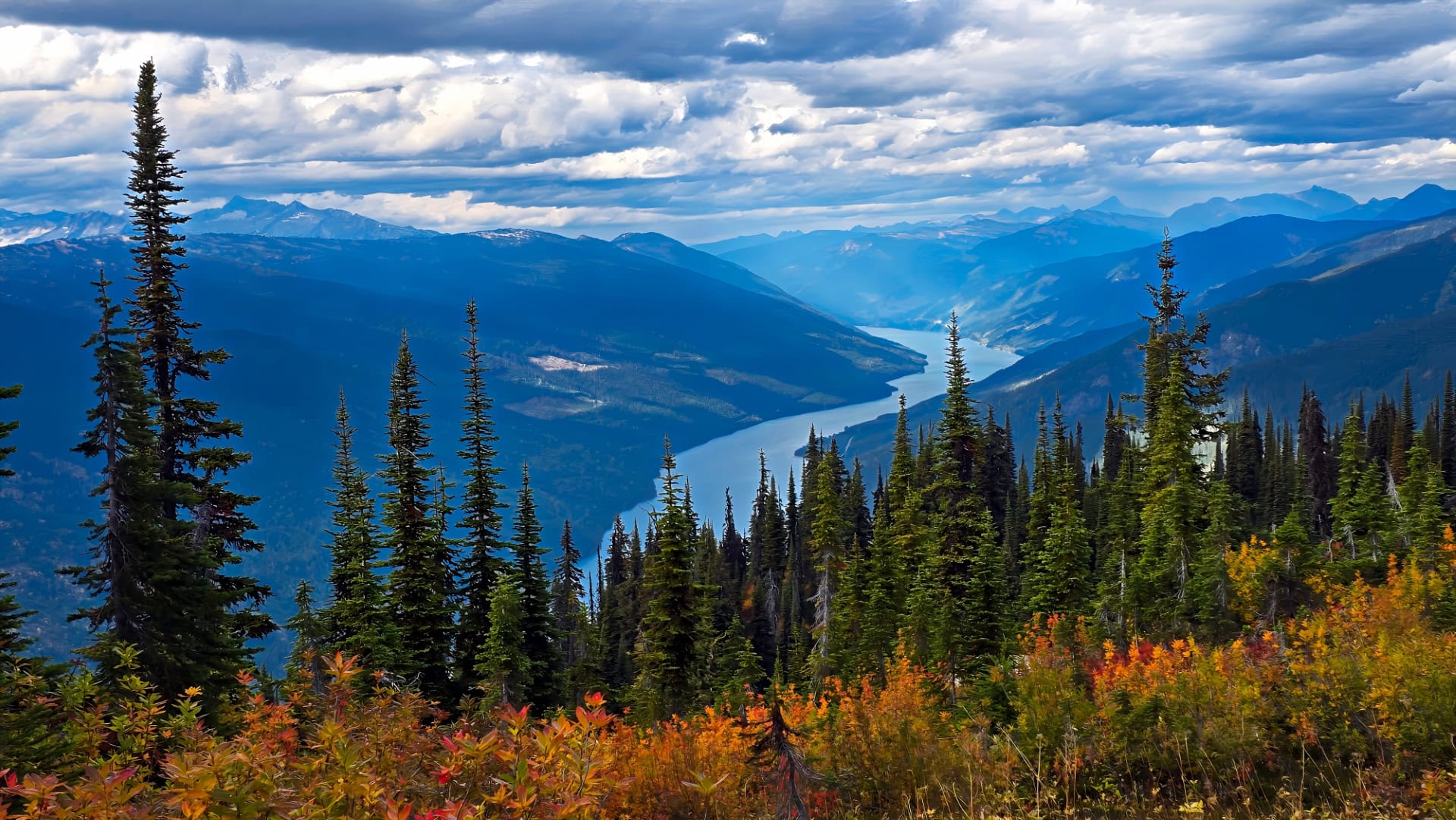
Revelstoke, our next stop in the Rockies, is also on the Columbia River. Although it is the same river that flows through Golden, it is much broader at Revelstoke. The photo at the top of this blog was taken from a viewpoint at the top of Mount Revelstoke. The photo, and that previous sentence, are somewhat misleading. Although the Columbia River is broader and deeper at Revelstoke than at Golden, the photo actually depicts Lake Revelstoke. The Columbia River enters the lake at the north end (the far end in the photo) and exits at the south end just before it passes through Revelstoke.
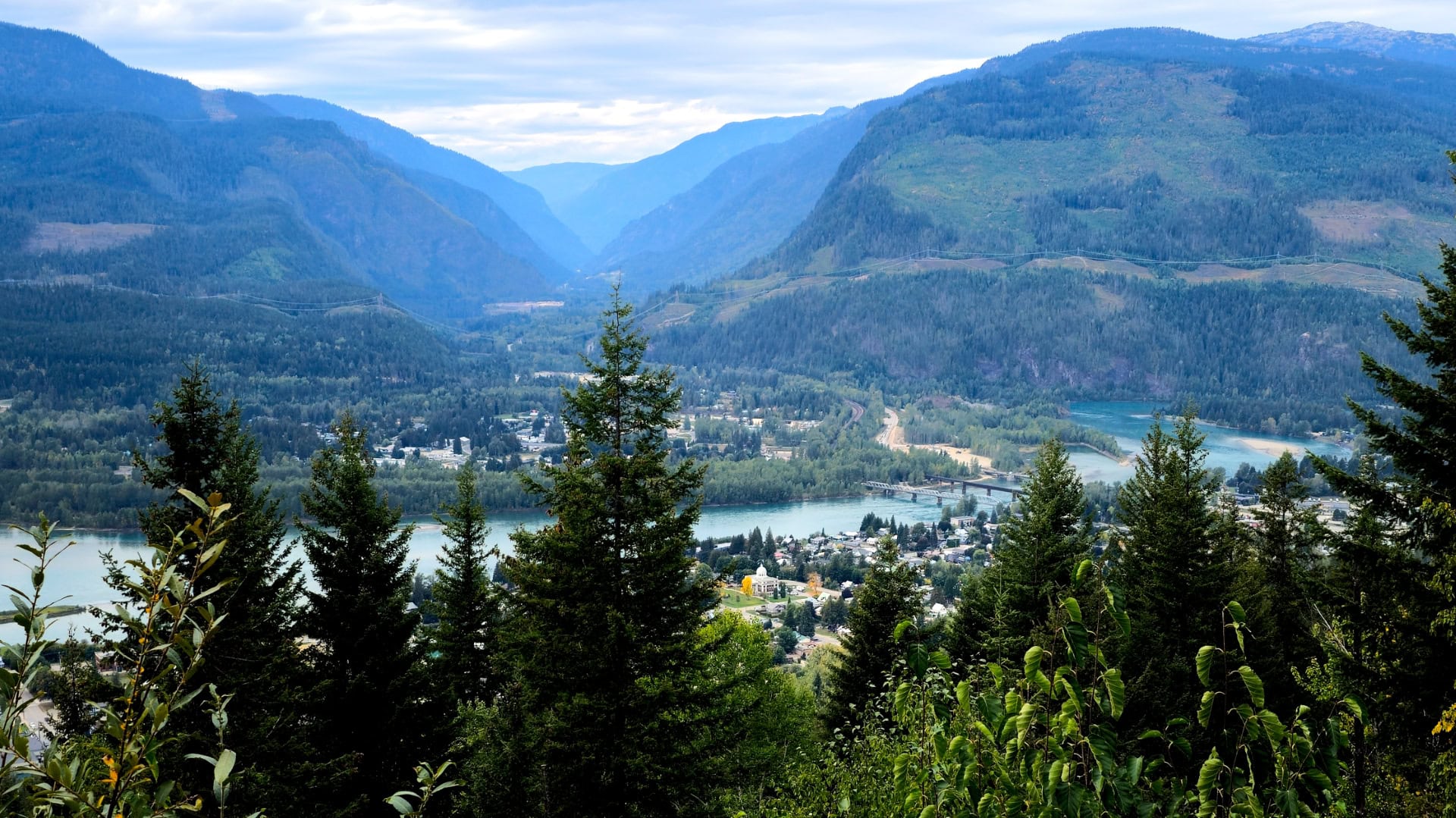
The town of Revelstoke is very attractive. The town core has many restaurants, which made it a bit difficult to choose between them. Quite a few cater to customers with foreign appetites. We only planned to stay in Revelstoke for three days, and we generally only eat in a restaurant for one meal a day. So it’s not like you can try every restaurant. You have to choose. We chose a Japanese meal the first night and a Chinese meal the next night. Two nights, two countries. Not a bad travel itinerary for someone who doesn’t actually have to get on an airplane.
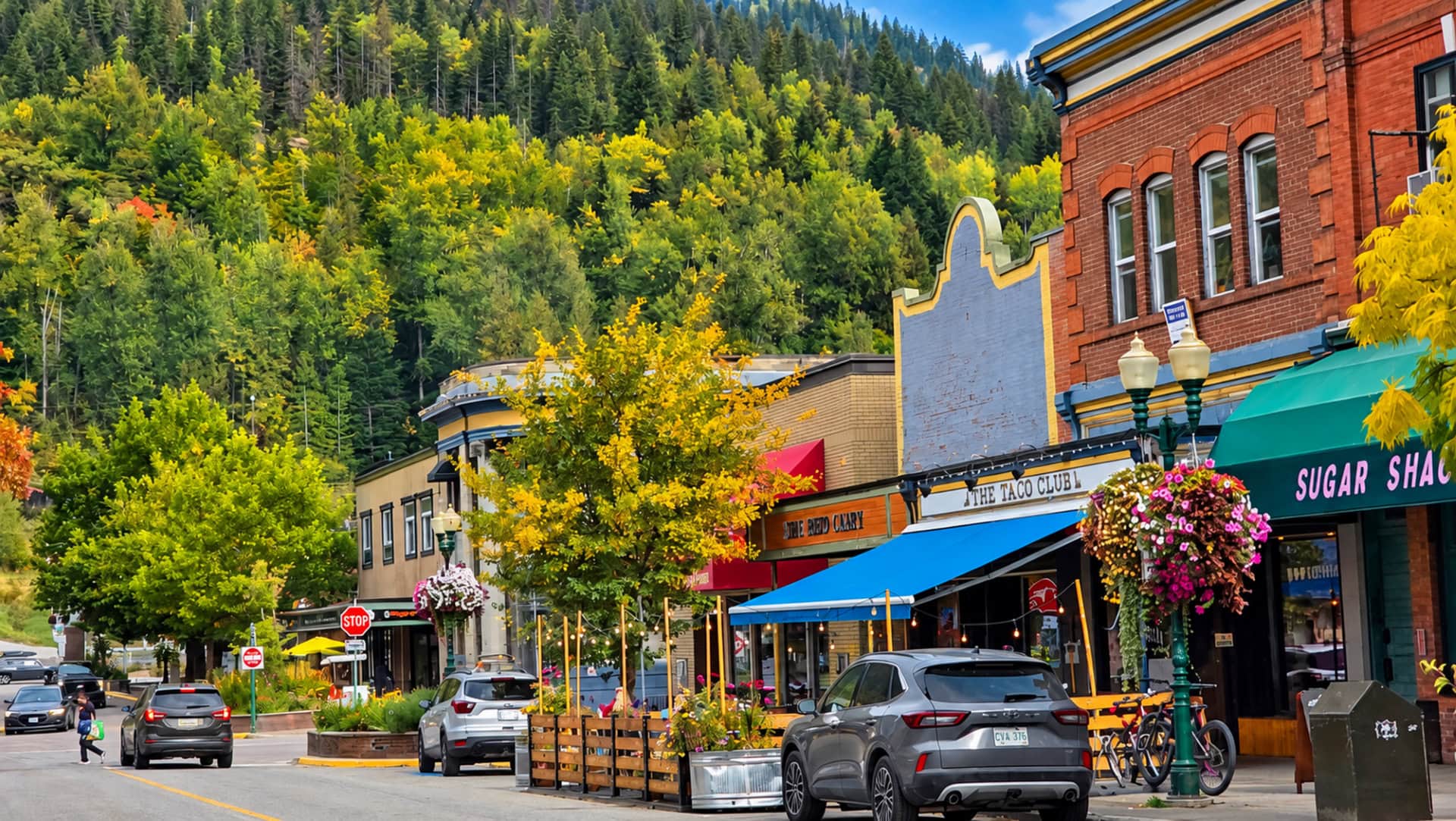
We had planned to stay in Rona’s parking lot for a weekend in Kelowna. We decided on that plan when we were still many miles away in Golden. The decision came about because we thought it would be nice to stay at a casino right in town again. We had previously stayed at quite a few casinos in both the USA and Canada. The most recent one was the casino in Calgary. So I called the casino in Kelowna from our campground in Golden and asked if they could accommodate us. They said they did not have a suitable place for us but that the Rona parking lot would likely be OK. So I called Rona and asked if we could park in their lot. They said we could.
When we actually arrived at Rona, we decided that their lot was too congested. We did find a spot within the lot where we could fit our rig, but if the coming weekend was busy for Rona, we would be an obstacle. We started looking for a campground and found one not too far from town. Sometimes the best-laid plans last until you actually arrive at the place where you planned to use them.
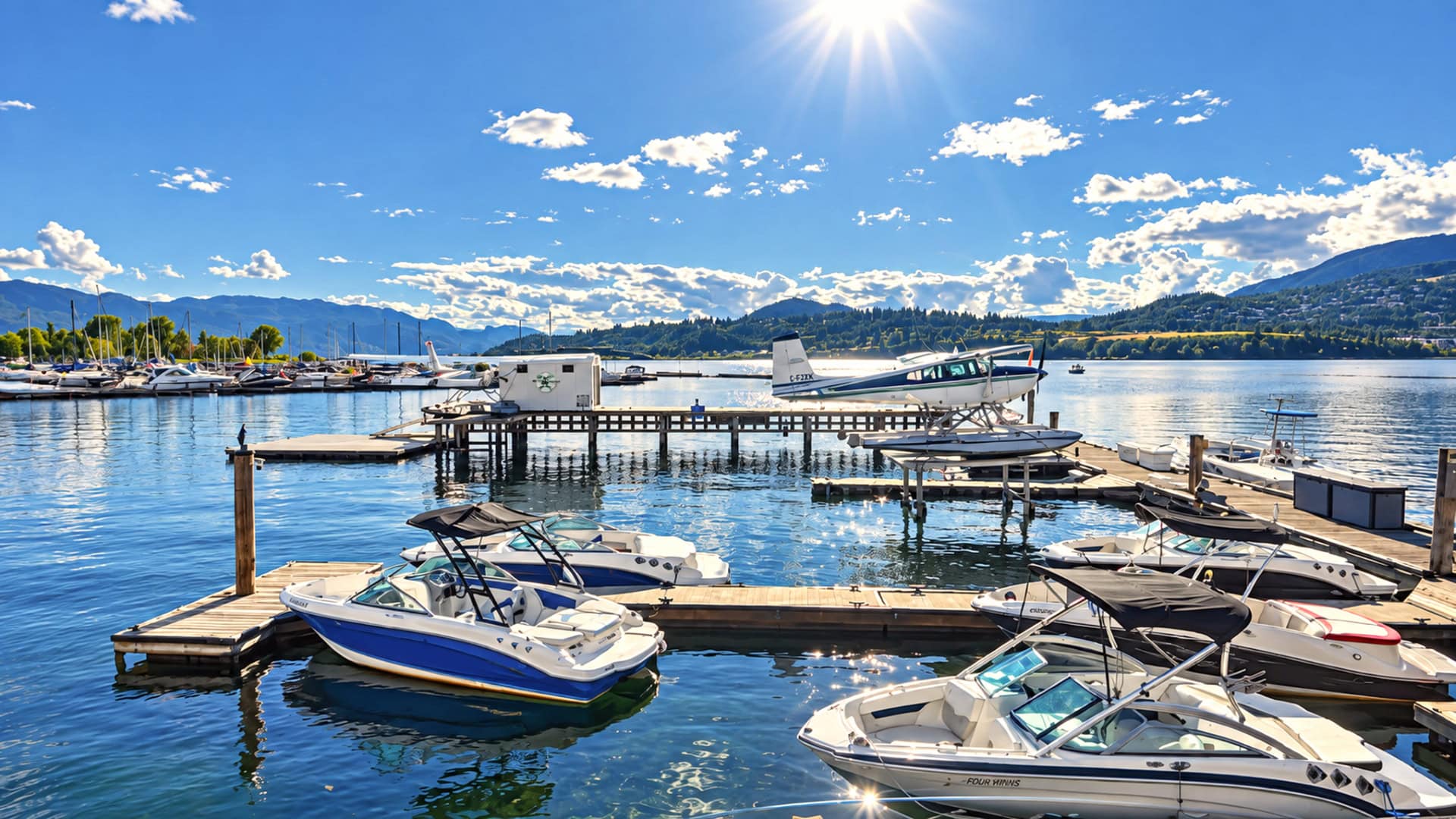
Have you ever seen a float plane floating on air? We did. In the harbour in Kelowna, we saw two float planes elevated by some sort of lifting mechanism at least four feet above the water. I would have loved to see the mechanism working. According to ChatGPT, the process works something like this:
- The plane taxis onto a submerged platform.
The lift has two supporting sections positioned underneath the aircraft’s two floats. When lowered, the platform is just below the water surface, allowing the floatplane to taxi into position. - The pilot shuts down and the plane is secured.
Once the floats are correctly positioned, the aircraft is tied to the lift. - A motorized lifting mechanism raises the platform.
Electric motors, winches, cables, chains, or hydraulic equipment pull the platform upward. Some systems use vertical posts anchored into the lake bottom; others are floating structures. - The aircraft ends up completely out of the water.
The floats are no longer supporting the airplane through buoyancy; the lift is. This keeps the floats out of the water when the plane isn’t flying, which reduces corrosion, algae growth, and maintenance.
I don’t know who thought of putting a crane under an airplane, but apparently it works.
We rode our e-bikes “all around the town.” I mean that literally, all around the town. You need to click on on this link to the bike map and then zoom in on Kelowna, BC, to see the trail we rode. When you do that, you might notice that we also left a mark on the map to document our bike ride on a trail a bit southeast of Kelowna near Myra.
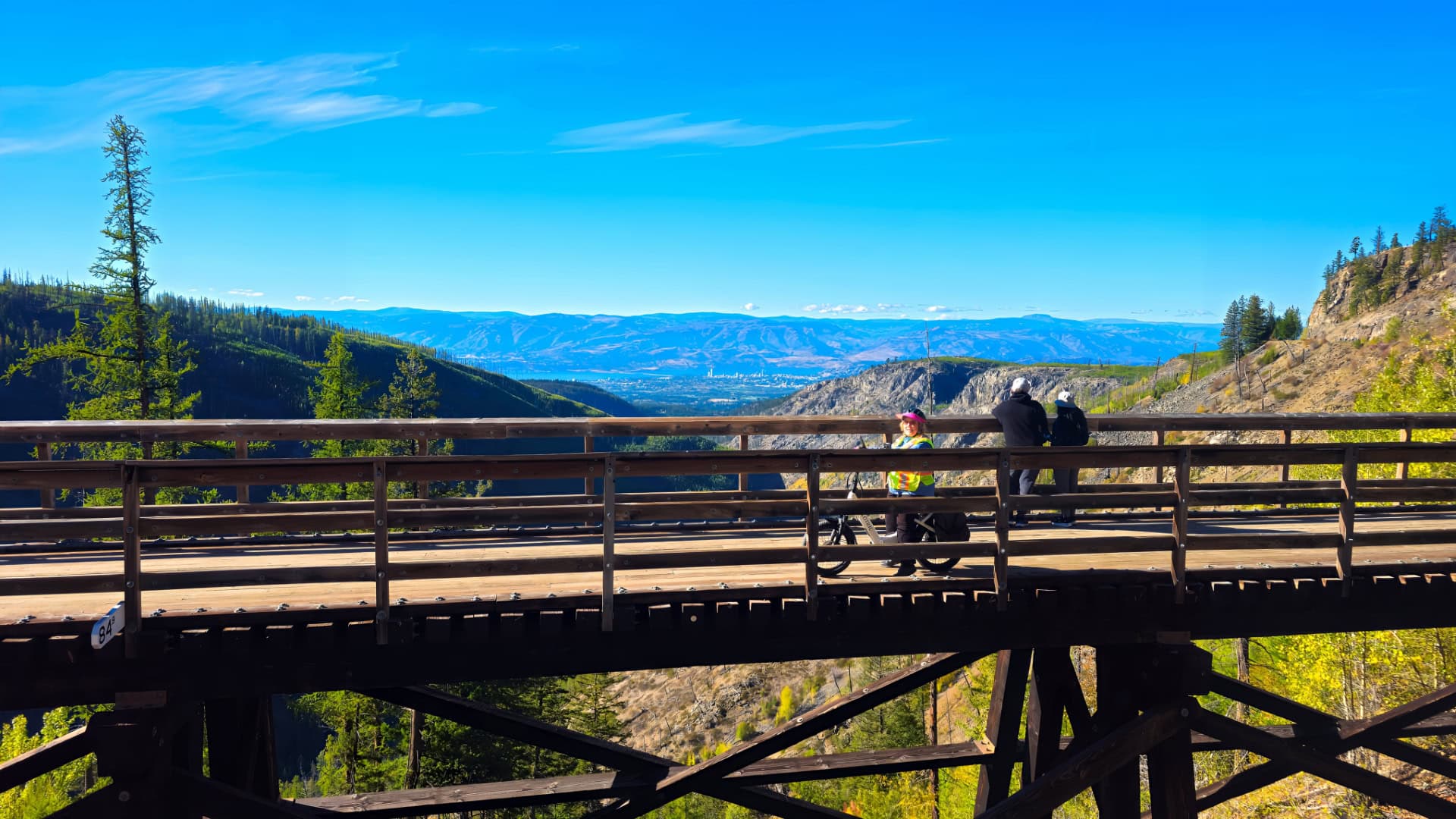
That trail was the Myra Canyon Trail and was probably the best 10-kilometre stretch of rail-to-trail biking that we have ever ridden. We rode our bikes through three railway tunnels and over 18 railway trestles. In fact, we did it twice in order to get back to the parking lot where we had left our car. The railway was built at the top of the mountain as part of the Kettle Valley Railway (KVR) line in the early part of the 20th century so that mining companies didn’t need to use American railways to get their mineral ore to the coast.
Given that they had to build it without the equipment we have today, it must have been quite a challenge. I’m thinking that the physical challenge of building the railway would have dwarfed the physical challenge of building an oil pipeline across British Columbia today. I suppose, however, that the political challenge of building the KVR across the mountains to tide water on the BC coast would likely have been comparable to today’s political challenge of building a pipeline.
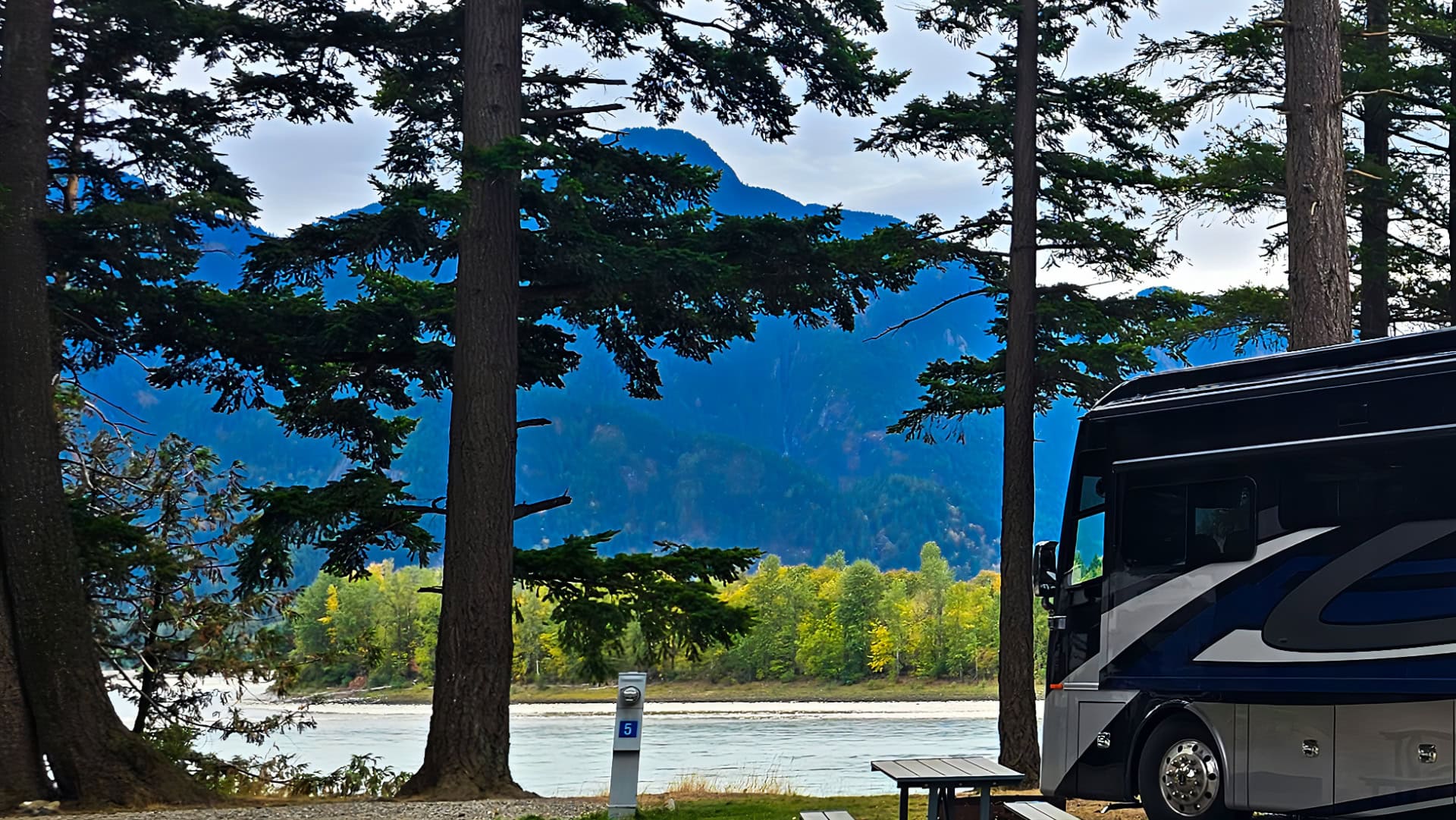
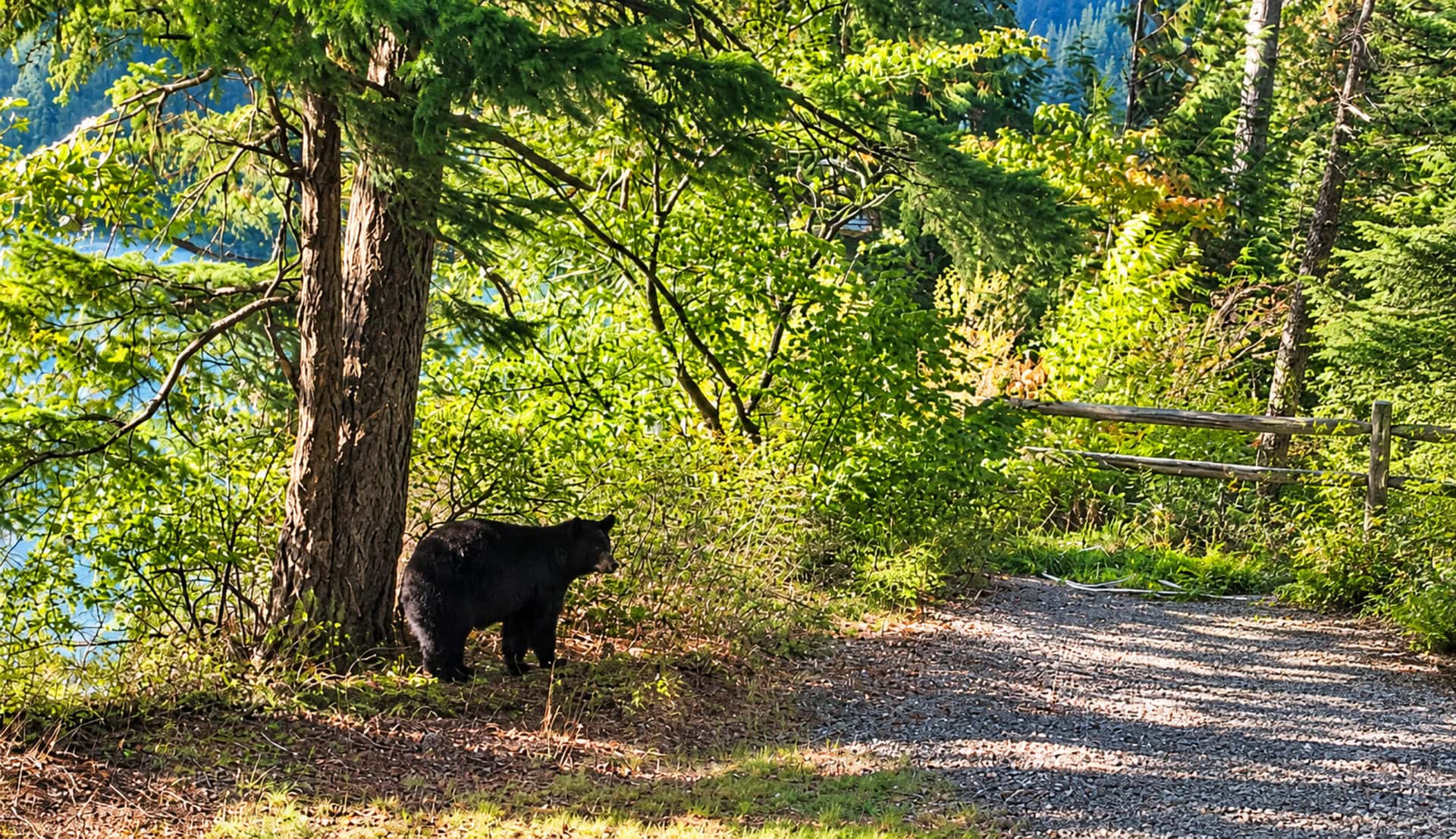
Our campground in Hope was right next to the rushing turquoise waters of the Fraser River. What a view every morning! Although the campground was surrounded by the town, that didn’t deter the bears from visiting. In the middle of our second day at the campground, we saw a black bear amble past our motorhome along the bank between our motorhome and the river. It was quite rotund. When I mentioned it to the campground host, she said that when I saw the bear, it had just finished eating the sandwiches out of the cooler that a camper had left outside of their vehicle. Apparently, the bear wasn’t just sightseeing. It had already found the campground’s equivalent of a drive-through restaurant.
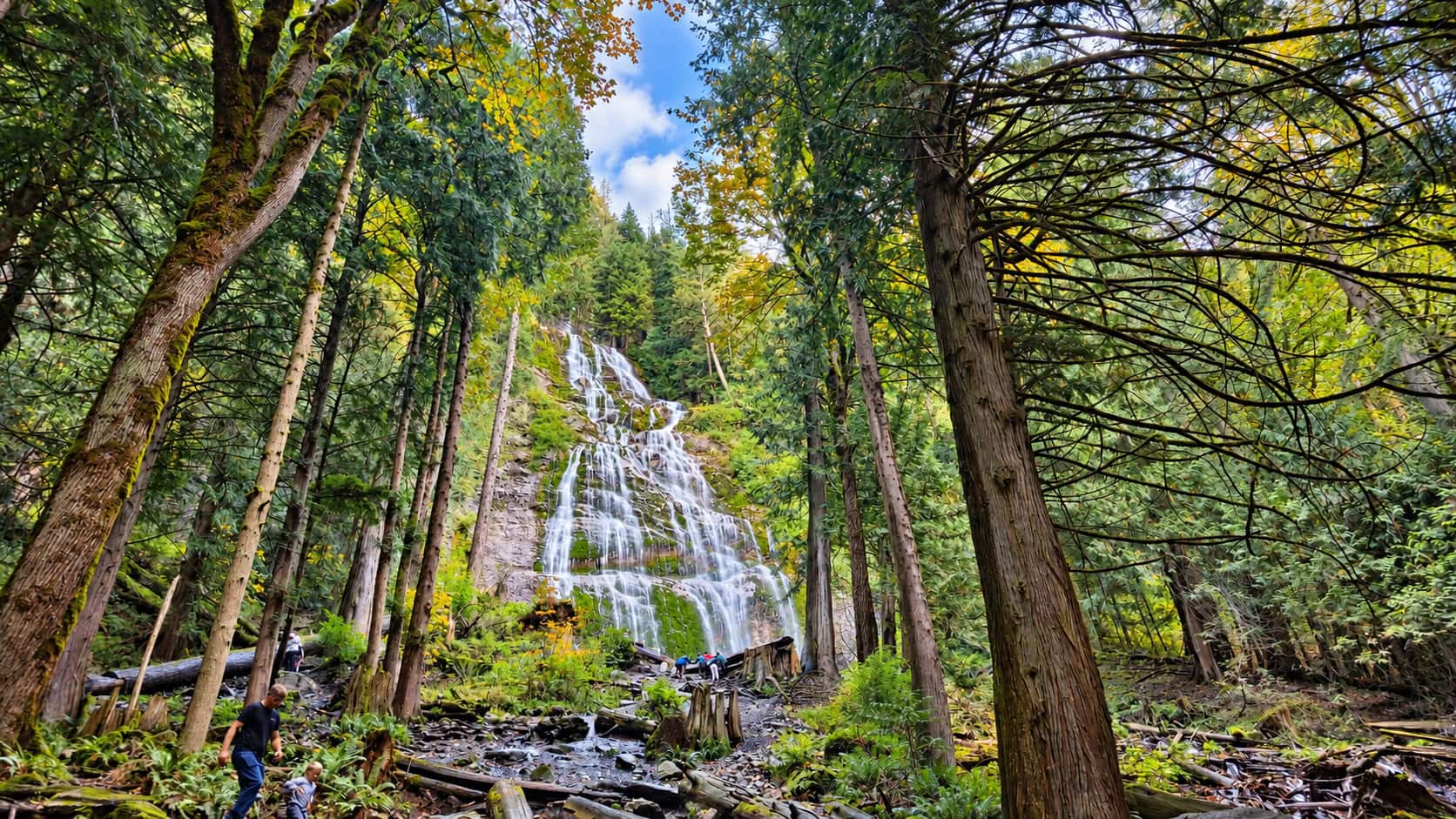
We visited both Bridal Falls and the Othello Tunnels at Coquihalla Canyon Provincial Park. It’s easy to see how Bridal Falls gained its name. What surprised us was how little water was required to create the veil. At the base of the falls, the water collects into a remarkably small stream, which then winds its way to join the Fraser River.
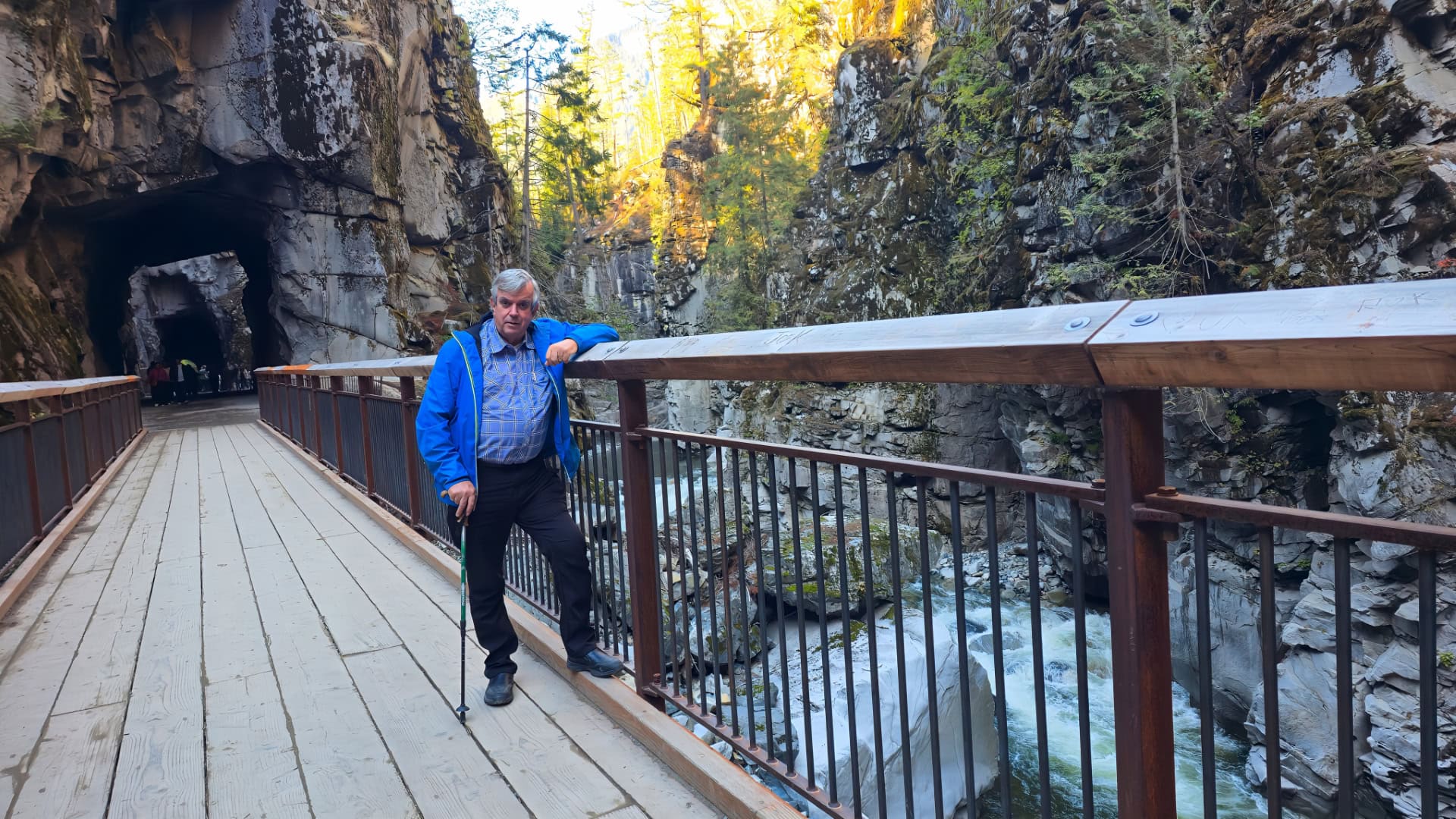
Coquihalla Canyon Provincial Park near Hope, BC, features a series of tunnels and trestles that were formerly part of the Kettle Valley Railway. That’s the same decommissioned rail line that we had previously visited when we were camped at Kelowna. So, once again, the Kettle Valley Railway has managed to show up in our travels. Apparently, we haven’t quite finished following an old railway that hasn’t carried a train in decades but now forms great biking and hiking trails.
Next stop, Vancouver.
Leave a Reply