Amarillo & Abilene Texas
We had half a tank of fuel when we left our campground in San Antonio, so it was a bit early to start paying serious attention to those roadside “signs in the sky” advertising diesel prices. That said, we couldn’t help noticing that prices in San Antonio were just over $5 per US gallon ($1.85 CDN per litre).
About two hours north, prices crept up to between $5.39 per US gallon ($1.97 CDN per litre). Still, with a quarter tank left, we pressed on. An hour further north, in Santa Anna, the price had climbed again to $5.49 per US gallon ($2.01 CDN per litre). By that point we were down to about 1/8 of a tank, so we surrendered and filled up for $307 USD ($425.00 CDN).
Naturally, about an hour later we arrived at our planned campground in Abilene, where diesel was $4.35 per US gallon ($1.59 per litre). Timing is everything and we missed.
On our trek north toward Amarillo, we stopped for a day in Abilene. After consulting our now-trusted AI travel advisors, we decided to stroll through the old downtown and visit the Frontier Texas Museum, which is just a short walk from the historic downtown core.
Our walk included lunch and a tour of the Paramount Theatre, which opened in May 1930, right at the start of the Great Depression. The theatre has been beautifully restored and is still in use today, mostly for movies but also for live performances.
The Frontier Texas Museum turned out to be excellent. It features a wide range of artifacts from the late 19th century: survey equipment, maps, rifles, handguns, spears, bows and arrows, hatchets, and plenty of taxidermy (buffalo and wolves, all very well done). There’s also a teepee, a stagecoach, a chuck wagon, and most interestingly, 11 “spirit guides.”
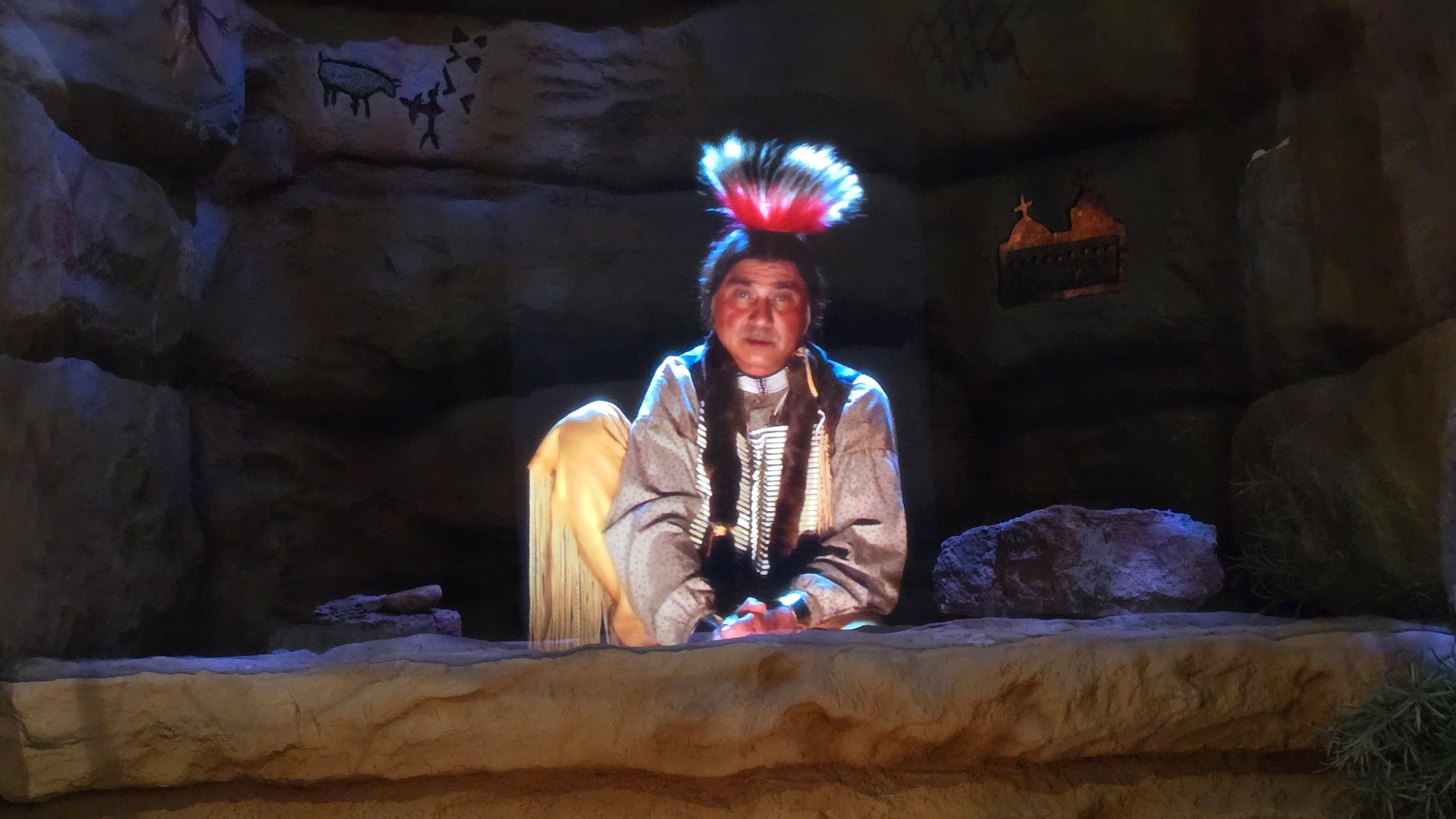
These spirit guides are holograms that tell stories of their experiences during the time when Texas was being taken over from the Comanche by incoming settlers. While most of the exhibits focus on the period around the Civil War, some displays go all the way back to prehistoric times.
One exhibit that caught my attention traced the evolution of hunting weapons starting with thrusting spears, to the atlatl (a spear-thrower), and eventually to the bow and arrow. I don’t recall ever coming across an atlatl before.
The atlatl was used by many Indigenous peoples across North America before the bow and arrow became widespread (roughly 500–1000 AD, depending on the region).
- It’s a short wooden tool, about half a metre long, with a hook on one end.
- A long, flexible dart, shorter than a spear and longer than an arrow, complete with feathers on the back and a point on the front, is fitted into the hook.
- When thrown, the atlatl acts as a lever, giving the dart much greater speed and distance than a hand-thrown spear.
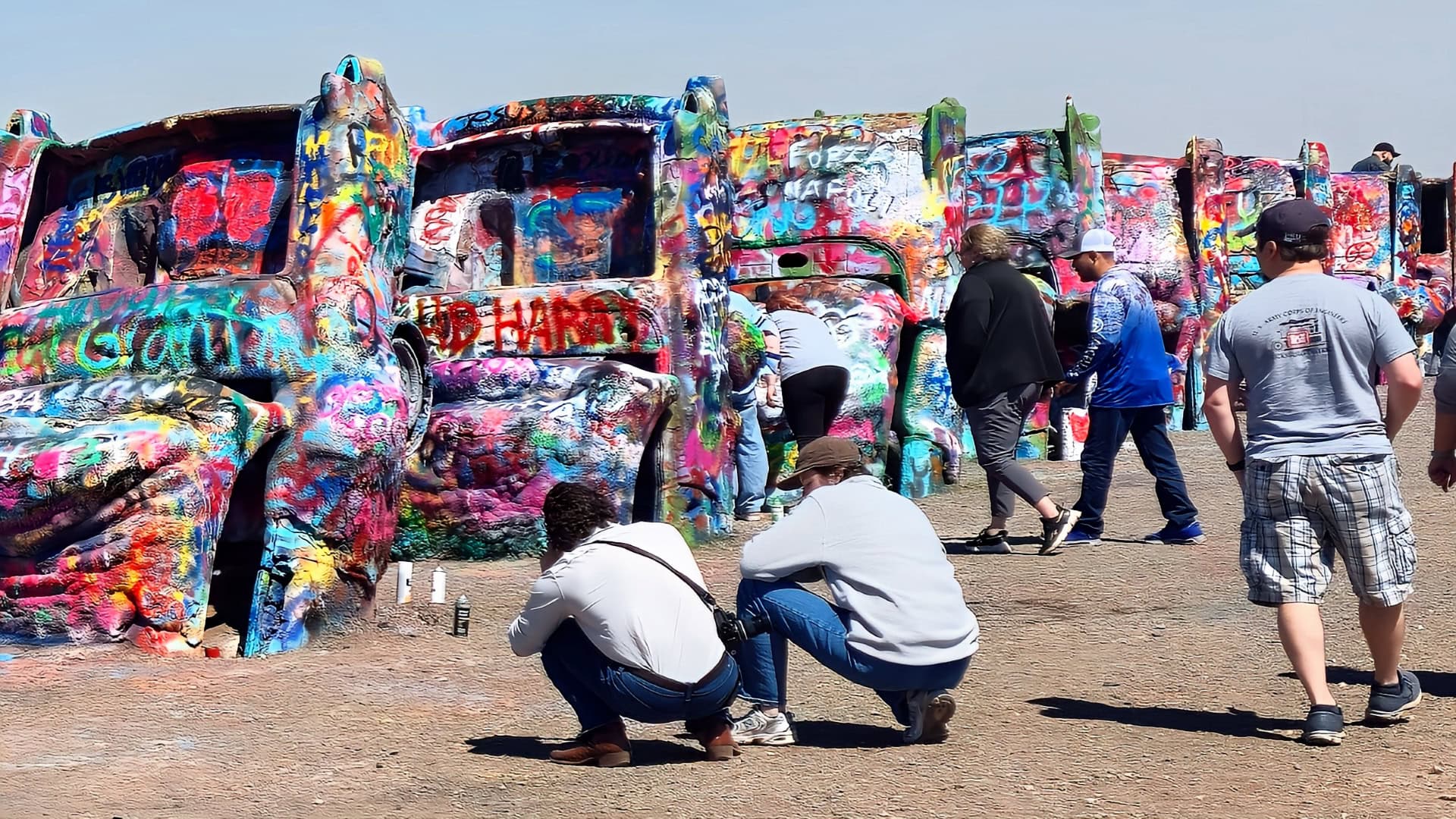
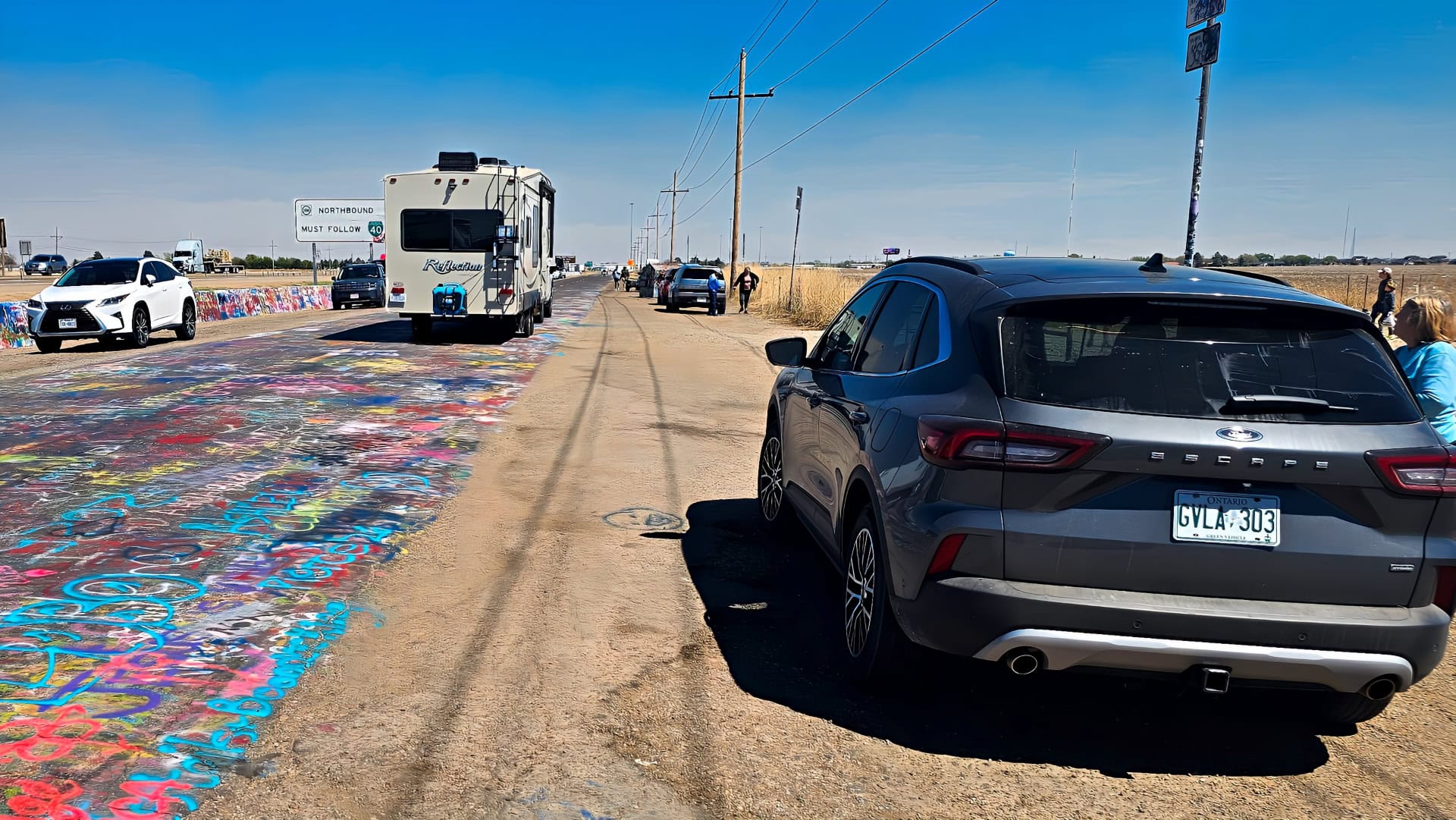
Amarillo is a bit of a strange town. One of its main tourist attractions involves burying ten Cadillacs nose-first in the ground and inviting tourists to spray-paint them. This is known as “Cadillac Ranch”. Try typing it into Google Maps or Google Chrome, you’ll see what I mean.
When the layers of paint get thick enough, some of it is chipped off and turned into jewelry, which is then sold back to tourists. The attraction sits just off Interstate 40 a few miles west of town. Since it was only about a kilometre from our campground, we drove past it several times before finally stopping.
At first glance, there was a trailer on site that looked like it might be selling ice cream or snacks. As we got closer, we realized it was selling aerosol paint cans.
The cars themselves are so heavily coated with paint that you mostly have to take it on faith that they’re actually carcasses (pun intended) of Cadillacs. At this point, they look more like brightly coloured geological formations than automobiles. Some enthusiastic visitors have expanded the artwork to nearby objects, including about half a kilometre of the roadway and the concrete barriers along Interstate 40.
Interstate 40 was built along the path of the old Route 66, which is, of course, a tourist attraction in its own right. Since the guidebooks recommended it, we drove to the Historic Route 66 through Amarillo. We were not impressed. The area was nearly deserted and has clearly seen better days.
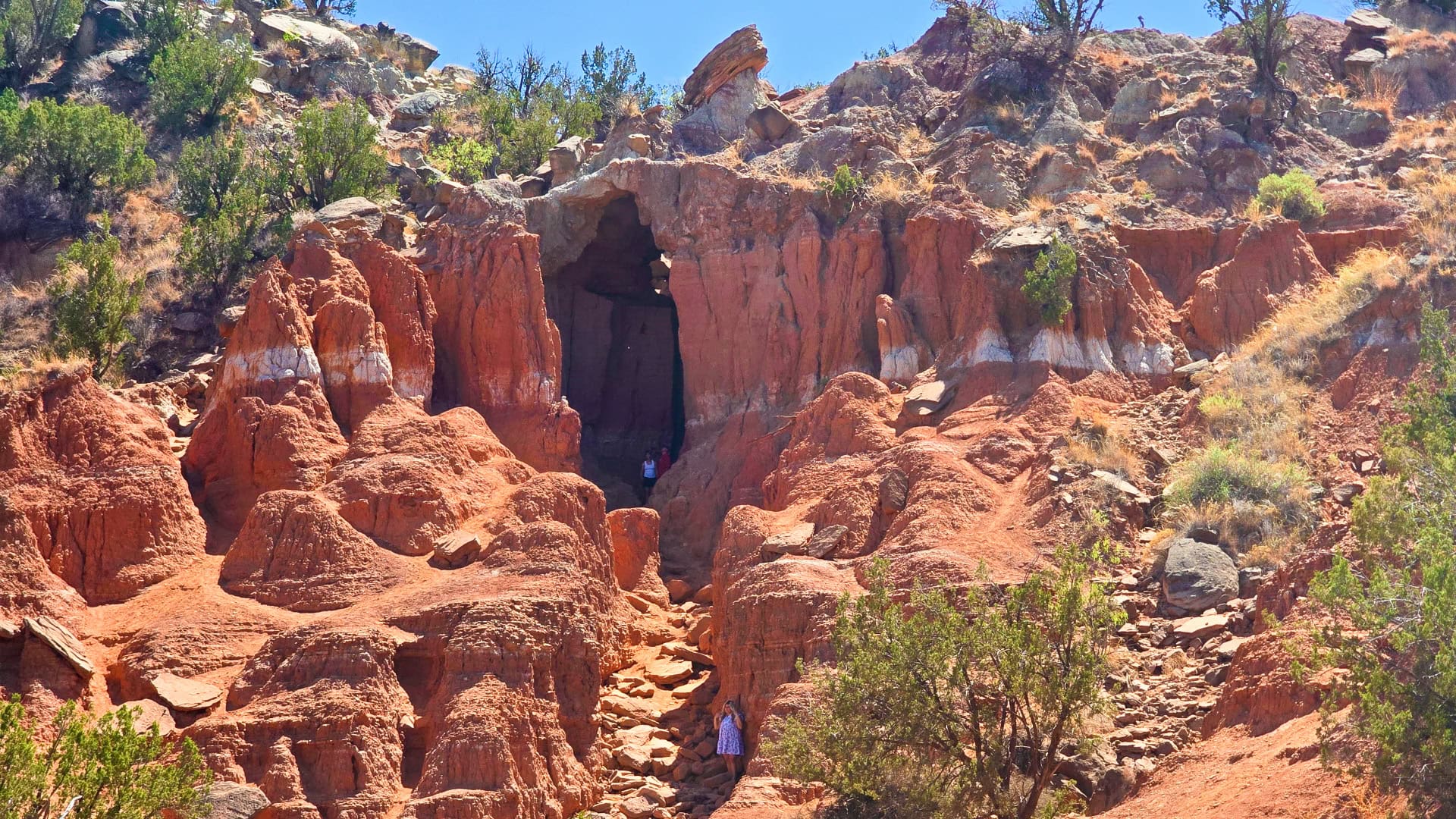
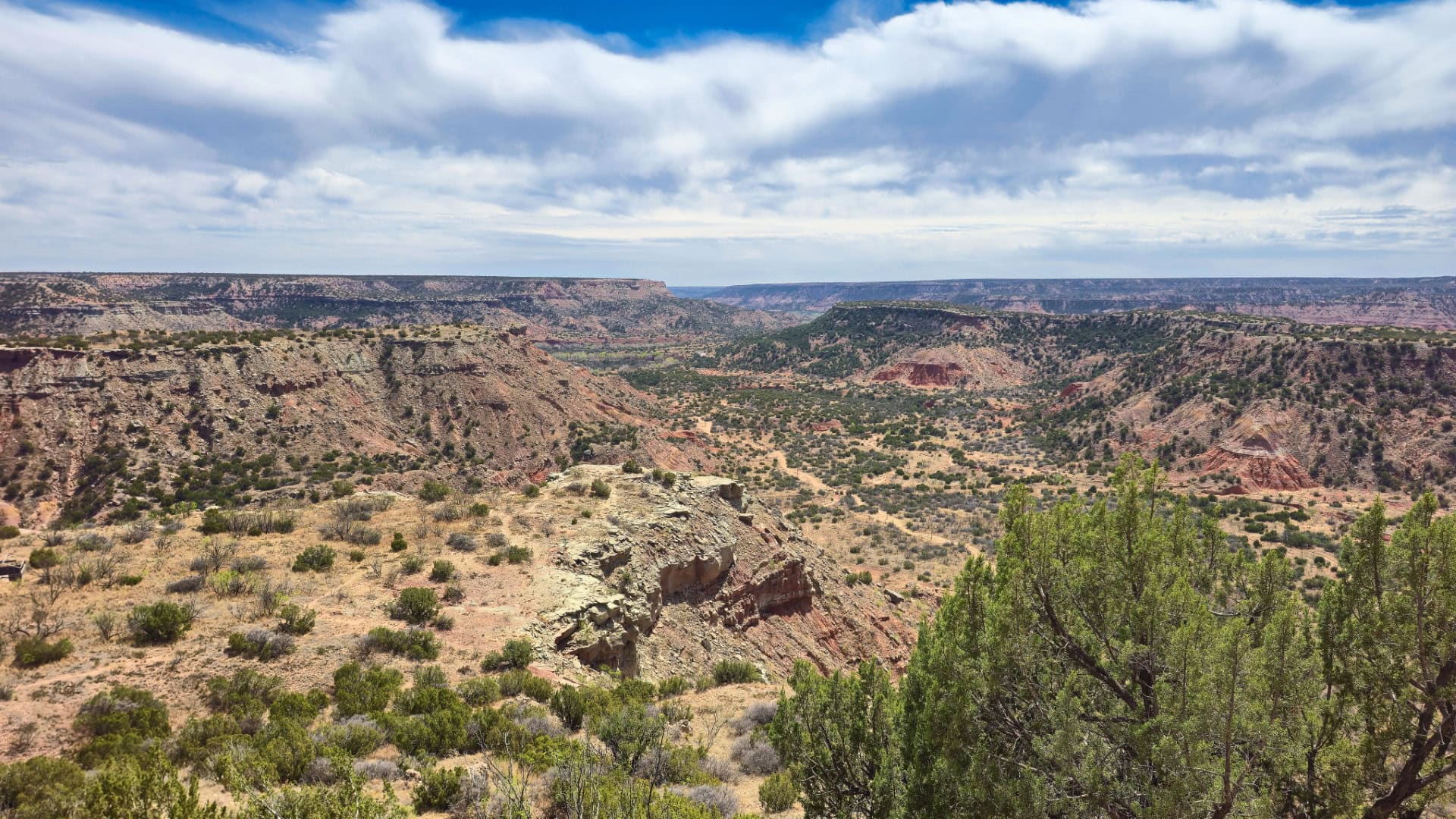
Palo Duro Canyon is about a half-hour’s drive south of Amarillo and is billed as the second-largest canyon in the United States, after the Grand Canyon. It stretches roughly 200 kilometres (150 miles) in length and is about 250 metres (800 feet) deep. The northern section includes a visitor centre, trading post, several campgrounds, and a 26 km (16 mile) scenic drive, which we thoroughly enjoyed, despite the dry heat. There are also quite a few hiking trails.
We walked a few hundred metres on a couple of them, but it was simply too hot and dry to make it enjoyable. One popular hike to the Lighthouse formation is about 10 km round trip, and the guidance is to bring about 3 litres of water per person, drink before you are thirsty, and to turn back once you’ve used half of it, even if you haven’t reached the Lighthouse rock at the end of the trail. We, on the other hand, had one small bottle of water in the car and forgot to drink any of it. So, we retraced our steps, drove to the trading post and had ice cream instead.
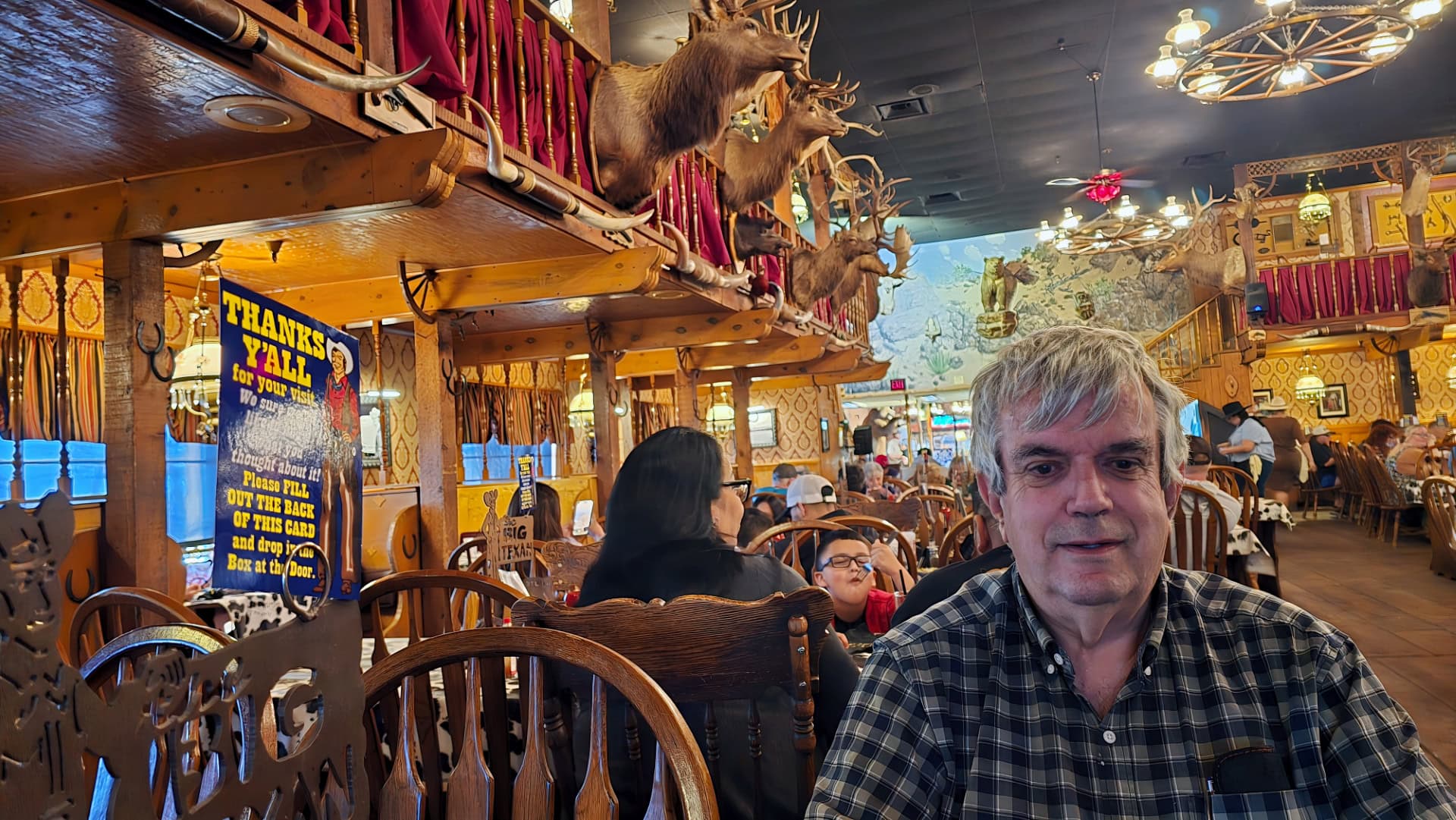
It’s rare (again pun intended) that we take photos of restaurants, but this one was worth it. The Big Texan Steak Ranch includes target shooting, a gift shop, a photo gallery where the images morph into skeletons as you move past them, and a taxidermy filled dining room.
They also offer a 72-ounce steak challenge: eat the whole thing (plus all the fixings) in under an hour, and it’s free. Jackie and I chose to share a 10-ounce steak with sweet potato and a Caesar salad.
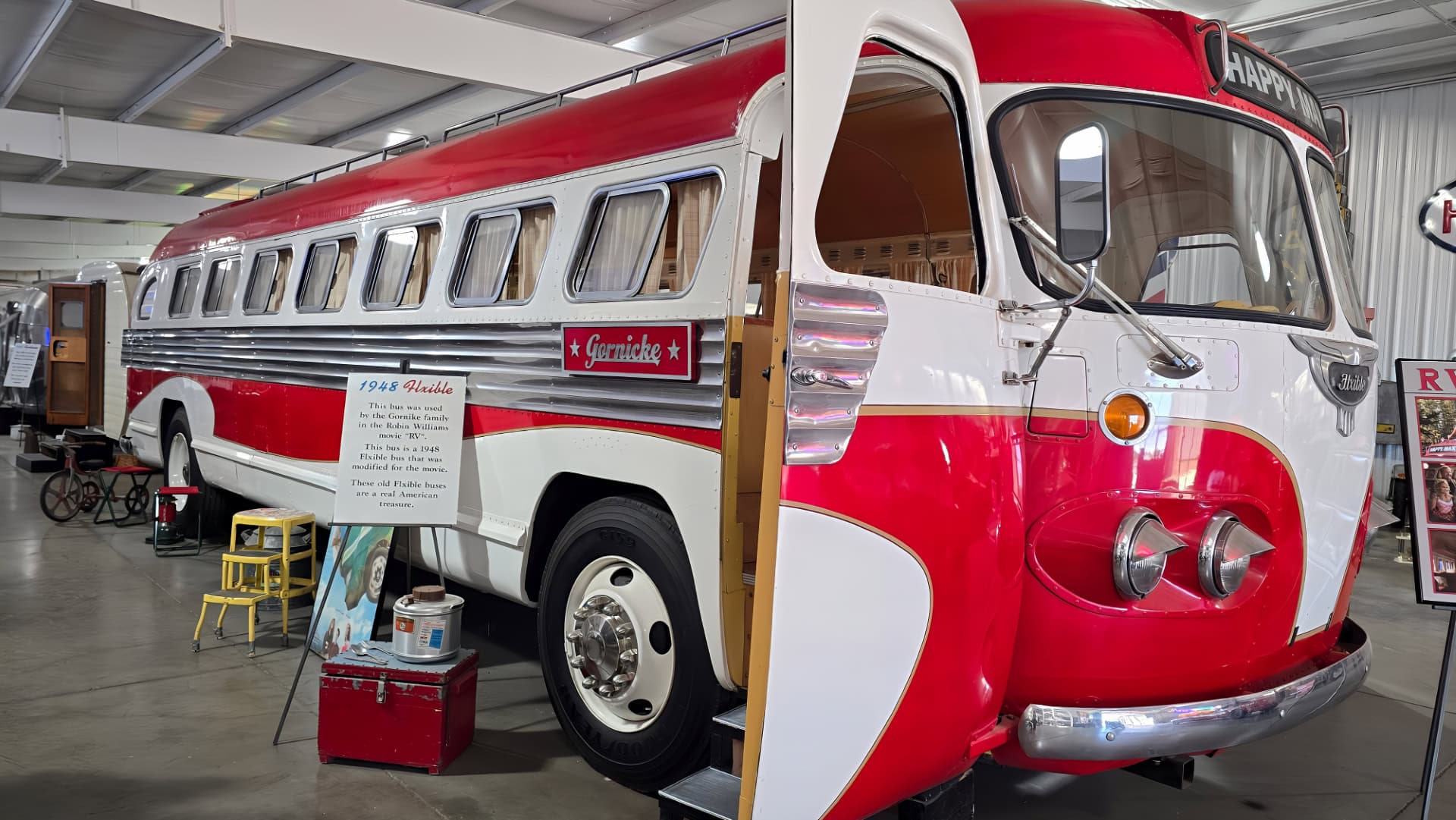
This is the less-famous RV bus from the movie “RV” starring Robin Williams. That movie comes up surprisingly often when chatting with fellow campers. We found this “1948 Flxible” bus which had been modified and driven by the Gornicke family in the film at an RV museum on the outskirts of Amarillo.
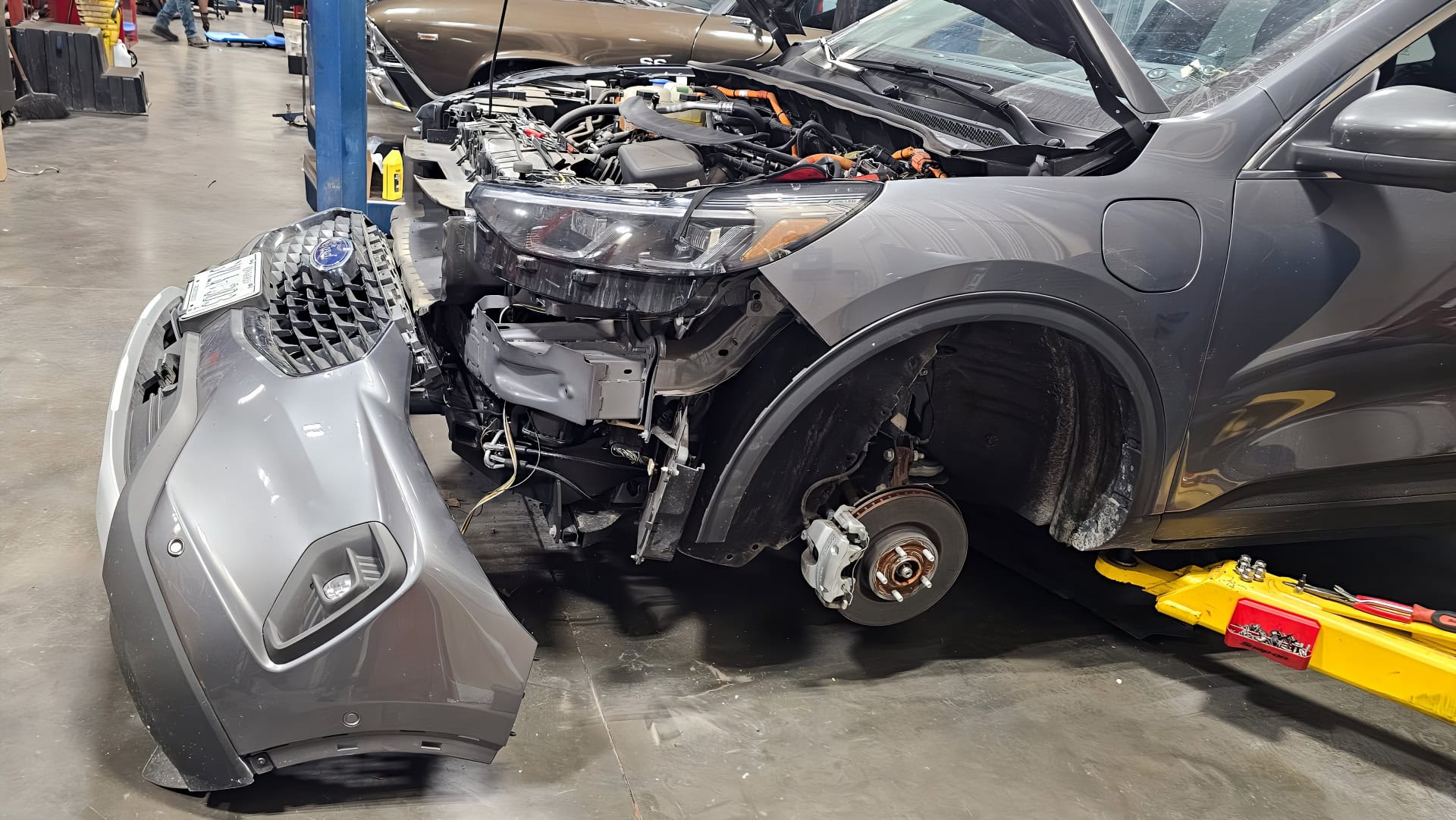
No, we did not have a car accident. Back in February, when it was -16°C (3°F), the electrical socket connecting the motorhome to the towed car (“toad”) broke loose from the plastic grille of our Ford Escape. We managed to keep using it, but it was awkward since the socket is supposed to be firmly mounted. While in Amarillo, I decided to have the socket relocated to the left front bumper. As the photo shows, that turned out to be easier said than done. The fix cost $600 CAD ($432 USD).
We’re now slowly making our way northeast. Next planned stop: Sayre, Oklahoma, for a day or two before continuing on to Oklahoma City.
Leave a Reply